
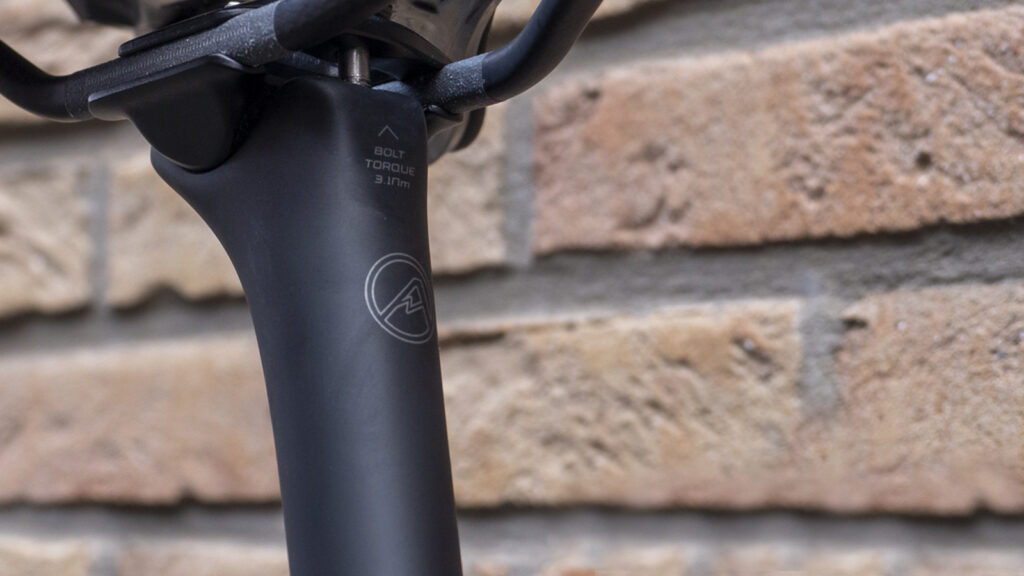
Take a deep dive into the best road bike seatposts and one word you’ll find continually cropping up is compliance. While you may be tempted to think the cycling world has got a little bit too obsessed with ticking all the boxes in the safety manual (although that is, unarguably, an important aspect), compliance in this scenario is a measure of the elastic deformation the seatpost can endure – which a key contributor to comfort. The introduction of carbon to bike manufacturing was a game changer for seatposts.
Not only can it help to reduce the overall weight of the bike, but the way in which carbon components are manufactured – by building up layers of fibres – can be adjusted to give it the perfect blend of compliance and stiffness. From damping to deflection, the best carbon seatposts can help soften vibrations and take the edge off impacts. But that doesn’t mean carbon is the only option.
You may be looking for a simple weight-saving aluminium option or, for those who like to hit the trails, some of the best gravel seatposts use rubber-cushioning elastomers or mechanical pivots and springs to smooth out the bumps. It is perhaps not as obvious a change to your set-up as the best road bike pedals or best road bike wheels but a new seatpost is a relatively cheap upgrade that will offer a perceivable difference – and it might just be what you need to take your ride to the next level. Scroll down for a round-up of our favourite options or, if you’re unsure what to look out for, we have included a guide on how to choose the best road bike seatposts at the bottom of the page.
Best road bike seatposts (Image credit: Syntace) Syntace P6 Carbon Hi-Flex Best carbon seatpost Specifications Diameter: 27. 2mm – 34. 9mm Setback/Layback: 0mm Material: Carbon Today’s Best Deals View at Competitive Cyclist (opens in new tab) Check Amazon (opens in new tab) Reasons to buy + Looks like a standard post + Compliance comes from construction of carbon rather than flex points Reasons to avoid – Expensive Rather than building in flex points and elastomers, the Syntace uses the layup, directional fibres and internal shaping of the shaft to create compliance.
Instead of bonding a metal clamp head into the top, the latest version is a one-piece carbon post, which keeps it light and with great shock absorbing and damping, but maintains directional stability. Even without the type of mechanical techniques employed by the Canyon and Cane Creek options in this list, the Syntace post can achieve up to 20mm of deflection under load. (Image credit: Roval) Roval Alpinist Best lightweight seatpost Specifications Diameter: 27.
2mm Setback/Layback: 12mm Material: Carbon Today’s Best Deals View at Backcountry. com (opens in new tab) Check Amazon (opens in new tab) Reasons to buy + Ultra-lightweight + No-fault crash replacement policy and lifetime warranty Reasons to avoid – Only one diameter size – Can be tricky to attach all types of saddle Specialized’s in-house component brand Roval has gone all out to make this seatpost light, claiming it is the ‘lightest post we’ve ever seen that passes our standards’. Weighing in at 136g for its 300mm length (it also comes in 360mm) really does put it up there with the lightest we’ve seen too.
It also comes with the same lifetime warranty Roval offers for its wheels and ‘S**t happens’ promise to replace or repair it for free if you damage it while riding within the first two years of ownership – subject to the company’s T’s & C’s, of course. One thing it doesn’t offer is much in the way of options, with only one diameter size (27. 2mm), one colour (black) and one offset size (12mm).
(Image credit: Zipp) Zipp Service Course SL Best for those on a budget Specifications Diameter: 27. 2 mm, 31. 6 mm Setback/Layback: 25mm Material: Aluminium Today’s Best Deals View at Walmart (opens in new tab) View at Amazon (opens in new tab) View at Competitive Cyclist (opens in new tab) See all prices (18 found) Reasons to buy + Adjustability + Low-cost option Reasons to avoid – Weight Not everybody has much to spend on a seatpost; many riders are just looking for something simple that they can forget about once it’s in the bike.
For under US$100, the Zipp Service Course SL is about as good as it gets. First and foremost, clamp design makes the bolts accessible for quick angle adjustments, and the lower portion of the cradle has been extended to offer additional support for saddle rails if you slam yours all the way back. The Service Course SL seatpost is made from 3D forged aluminium and is claimed to weigh 259g in the 27.
2mm, zero-setback option. (Image credit: Thompson) Thomson Elite The gold standard in alloy seatposts Specifications Diameter: 25 – 32. 4mm Setback/Layback: 0mm, 25mm Material: Aluminium Today’s Best Deals View at Pro Bike Kit (opens in new tab) View at Pro Bike Kit (opens in new tab) Check Amazon (opens in new tab) See all prices (12 found) Reasons to buy + Stiff strong and light Reasons to avoid – Can be a bit harsh on your derriere Thomson’s Elite seatpost has long been considered the gold standard for adjustability, strength and performance when it comes to supporting your seating arrangements – it’s also known for its firm ride quality.
Made from a single piece of machined 7000-series aluminium, it weighs about 200g depending on the size and diameter – giving it a decent advantage over the budget-option Zipp we feature above. The Elite seatpost is available in both straight and setback versions; the brand says its design incorporates a bending fuse to prevent catastrophic failure, and the head clamp and upper tube can withstand 350 foot-pounds of torque. (Image credit: Tune) Tune Leichtes Stück Perfect for going light without going carbon Specifications Diameter: 27.
2 mm Setback/Layback: 0mm Material: Aluminium Today’s Best Deals View Deal (opens in new tab) Reasons to buy + Latticed cutout looks amazing Reasons to avoid – Hard to find depending on where you live – Priced the same as a carbon post Masters of everything uber light, the Tune Leichtes Stück tips the scales at 155g (340mm). The CNC-machined post is made with 7075 aluminium and features a latticed pattern near the top to further reduce the amount of material. This is claimed to save, as Tune puts it, ‘a whopping 40g’ – it looks pretty cool, too.
Where it falls down against the Thomson Elite is that it’s only available in a 27. 2mm diameter with zero setback. It does come with titanium mounting bolts – because if you’re already going to this kind of effort to save weight, every gram counts.
(Image credit: Canyon) Canyon S14 VCLS 2. 0 A great option for a bit of added comfort Specifications Diameter: 27. 2 mm Setback/Layback: 10mm Material: Carbon Today’s Best Deals View Deal (opens in new tab) Reasons to buy + Tangible comfort improvements + Setup is fiddly + Decent weight for mechanical option Reasons to avoid – Not available in all regions Canyon makes a few models of its split-shaft seatpost, all designed to soften hard edges on the road surface.
The VCLS stands for ‘vertical comfort, lateral stiffness’ and it offers a unique dual-tube design which creates a leaf spring and offers tangible improvements in comfort. For a carbon seatpost, it is a bit on the heavier side, Canyon’s claimed weight of 220g making it 84g heavier than the Roval, for example, but it’s still much lighter than the Cane Creek featured below. For some, the design can flex too much and cause bouncing as you pedal along, similar to what some experienced when Trek adapted its IsoSpeed decoupler to some of its hardtail mountain bikes.
Adjusting your saddle angle is also more involved than a standard post, requiring it to be removed entirely from the frame. But, once the initial setup headaches are complete, it’s smooth sailing – for your rear end at least. (Image credit: Cane Creek) Cane Creek eeSilk+ The best gravel seatpost Specifications Diameter: 27.
2 mm, 31. 6mm Setback/Layback: 12mm Material: Carbon or aluminium Today’s Best Deals View at Competitive Cyclist (opens in new tab) View at Backcountry. com (opens in new tab) Check Amazon (opens in new tab) Reasons to buy + Huge amount of compliance + Lots of options + Combines several technologies Reasons to avoid – Mechanical aspects make it heavier – Looks might not appeal to roadies Cane Creek’s seatposts follow a similar mechanical theme to Canyon’s leaf spring system, but their alternative take uses a parallel-linkage system that absorbs the impact of bumps in conjunction with an elastomer to dampen the shocks.
In their eeSilk+ model, which is designed for gravel, that all adds up to a claim of up to 35mm in compliance. Cane Creek offers a decent amount of versatility, too. There are both aluminium and carbon options in 27.
2 and 31. 6 mm diameter sizes and, if you want something that is more road oriented, opting for the standard eeSilk model shaves 28g off the weight (down to 295g) in exchange for knocking that compliance down to 20mm. The elastomer, which is a rubber cushioning that sits in the middle of the parallel-linkage system, can also be changed to suit different rider weights.
(Image credit: Easton) Easton EC90 SL ISA Best for innovative design Specifications Diameter: 27. 2 mm, 31. 6 mm Setback/Layback: 20mm Material: Carbon Today’s Best Deals View at Amazon (opens in new tab) (opens in new tab) View at Amazon (opens in new tab) Reasons to buy + Out-the-box thinking + Lightweight Reasons to avoid – High price at RRP – Odd aesthetic Easton sought to make its EC90 seatpost more durable, but not by using the traditional method of adding material.
Instead, it went back to the drawing board to rethink the clamp design by eliminating the pinch zone at the back of the post. Easton came up with the RAD or Relief Area Design, where the material is removed from the area it would usually pinch, creating a flat edge and better-distributing clamping force. This will be a relief for those worried about damaging their components by over-tightening the clamp.
The seatpost itself is made from Easton’s top-end carbon fibre and, like the Syntace P6, the compliance comes in the construction of a single piece of carbon rather than engineered flex zones. The latest version also has Easton’s independent saddle adjustment (ISA) technology for fine-tuning seat positioning without having to get your tools out. (Image credit: Enve) Enve Road 300mm The best premium seatpost Specifications Diameter: 25.
4mm – 31. 6mm Setback/Layback: 0mm, 25mm Material: Carbon Today’s Best Deals View at Competitive Cyclist (opens in new tab) View at Backcountry. com (opens in new tab) View at Jenson USA (opens in new tab) See all prices (4 found) Reasons to buy + Clamp design + Weight Reasons to avoid – High price at RRP At 300mm in length, the Enve seatpost is available in 0mm, and 25mm-offset versions.
While quite a few carbon posts have a metal clamp head bonded on the top, the Enve post is carbon through and through. The Twin Link clamp uses two bolts with expanding wedges to adjust saddle angle and is easily accessible from the sides below the rails. Part of the Enve Road range with the Enve Road bar and stem , it’s unsurprisingly top-level componentry with a top-level price to boot.
It comes in sizes from 24. 5 to 31. 6mm and is claimed to weigh 178g in the 27.
2mm, 25mm-offset package – that’s pretty light but not as light as the Roval. How to choose the best road bike seatpost for you Are all seatposts the same? In short, no. Seatposts are an area where bike manufacturers seek to make gains in weight, aerodynamics and comfort – so there are a whole range of different types that come with different bikes.
If your bike has D-shaped or aero seatpost, like the Specialized Pavé , it is unlikely you would be able to upgrade it without going back to the specific manufacturer. Some bikes, such as the Giant TCR , even have integrated seatposts that cannot be replaced. If it has a round seatpost, however, you are likely to have far more options – but diameter becomes all-important.
The two standard diameters are 27. 2mm and 31. 6mm and all of the seatposts featured in the guide will fit one of those two sizes, while some have more options in between.
Some bikes even go as narrow as 25. 4mm, Cannondale being a case in point. A skinnier post will provide a bit more flex, and therefore a slightly more comfortable ride, while a fatter one will be more robust and add stiffness for additional power transfer.
The length of the seatpost will also need to be considered. If you’re on a frame that’s too small or you have extremely long legs and need a lot of seatpost sticking out of the frame, it’s something to keep in mind. Conversely, if you’ve got short legs and ride an XS frame, your seatpost may bottom out and still be too high.
Cutting down a seatpost is no big deal – just remember to measure twice and if it’s carbo use an appropriate blade and wear a mask. Most of the best road bike saddles use a two-rail system, however not all two-rail saddles are compatible with all seatposts. Saddles with alloy rails will have 7mm, round rails, while most carbon-railed saddles have 7x9mm oval rails.
There are also a few saddle/seatpost brands which use a proprietary clamp and rail design; although these have largely died out because most people don’t like to be locked into a specific system. Do aero seatposts make a difference? As with all aerodynamic upgrades in cycling, it is a culmination of marginal gains that will start to make noticeable differences to your riding. So, yes, seatposts can make a difference but, in most cases, aero seatposts will come in a proprietary design to fit a specific bike, making upgrade options considerably limited.
Do carbon seatposts make a difference? Like handlebars , wheels , and nearly all other bike components, seatposts come in a variety of materials, the most common being aluminium and carbon fibre. As always, carbon commands a higher price tag, but it usually weighs less and can be constructed in a way that dampens more vibration while maintaining directional stiffness in a way that will benefit the rider. In your search, you may also run into carbon-wrapped seatposts.
These are clever marketing from component brands and are an aluminium post with a carbon veneer around the outside. Claims of additional dampening and offering ‘the best of both worlds’ should be taken with a pinch of salt, our recommendation is stick to one material or the other. Are setback seatposts more comfortable? Setback is the degree to which the seat clamp sits behind the top of a straight seatpost.
There is also a separate measure of layback for seatposts that have a bend near the top of the post. This offers more variety for a rider when choosing a new seatpost and will largely come down to personal preference – a bike fitting is the best way to determine what works for you. The greater the setback, the further the sitting position will be behind the bottom bracket and away from the handlebars – so it is something that taller riders might want to investigate to help improve comfort on the bike.
Some brands also offer layforward posts which, as you may have guessed, bend in the opposite direction to achieve a more aggressive position. Or you can make like Adam Hansen and fit your layback post in the wrong way round. Are suspension seatposts worth it? Upgrading to a suspension seatpost is a way to add comfort to your ride, especially if you like to get off the tarmac onto gravel and trails.
There are many different systems to choose from, which all have their own benefits. The major downside is that any mechanical system involving moving parts is likely to add weight to your bike and also introduces an extra element of maintenance to your setup. Depending on the type of seatpost, there could also be a negative effect on power transfer to the pedals.
Round up of today’s best deals Reduced Price (opens in new tab) Syntace P6 Carbon Hi-Flex seatpost (opens in new tab) (opens in new tab) $249 (opens in new tab) $229. 99 (opens in new tab) View (opens in new tab) See all prices (opens in new tab) Roval Alpinist Seatpost (opens in new tab) (opens in new tab) $274. 99 (opens in new tab) View (opens in new tab) See all prices (opens in new tab) Zipp Service Course SL seatpost (opens in new tab) (opens in new tab) $153.
95 (opens in new tab) View (opens in new tab) See all prices Reduced Price (opens in new tab) Thomson Elite InLine Seatpost (opens in new tab) (opens in new tab) $123. 99 (opens in new tab) $79. 49 (opens in new tab) View (opens in new tab) See all prices (opens in new tab) Cane Creek eeSilk+ (opens in new tab) (opens in new tab) $199.
99 (opens in new tab) View (opens in new tab) See all prices (opens in new tab) Easton EC90 seatpost (opens in new tab) (opens in new tab) $139. 50 (opens in new tab) View (opens in new tab) See all prices (opens in new tab) Enve 300mm carbon seatpost (opens in new tab) (opens in new tab) $300 (opens in new tab) View (opens in new tab) See all prices We check over 250 million products every day for the best prices powered by.
From: cyclingnews
URL: https://www.cyclingnews.com/features/best-road-seatposts/