
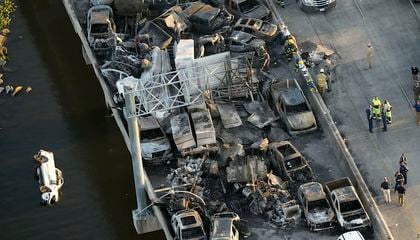
An unusual weather phenomenon known as “super fog” has created dangerous driving conditions on several Louisiana roads over the past few weeks, leading to a that left a total of eight dead and dozens injured. Visibility on I-55 near New Orleans during the first of the crashes, which led to a 158-car pileup on October 23 with seven fatalities. Photos of the aftermath show charred and smashed vehicles and a car that had fallen off a bridge into the water below.
“I’m shocked still. There were explosions happening from the 18-wheeler that was way farther ahead that was on fire,” Kylie Cuevas, a survivor of the crash, tells Maddie Kerth of . “They were trying to put it out.
We just kept hearing explosions, which was very scary for all of us. ” The second crash occurred on I-10 in Louisiana earlier this week, causing one death and several injuries. City officials over the next few days while super fog remains a threat.
forms when smoke from smoldering organic material—such as leaves, brush and trees—mixes with moisture in cool air. Smoke particles attach to water molecules in the fog, creating a denser haze that lowers visibility to less than ten feet, reports Mike Bedigan for the . The phenomenon differs from smog, which forms as smoke from human-made air pollutants mixes with cooler, saturated air.
SUPER FOG IN NEW ORLEANS EAST These latest bouts of super fog have been aided by burning in the New Orleans metro area, including one on a 200-acre remote private property near Bayou Sauvage that’s been smoldering since mid-October, reports Carlie Kollath Wells for . Firefighters have been unable to use heavy equipment to fight the blaze out of fear of damaging underground gas pipelines on the property. Such fires are usually put out with rainwater, but most of Louisiana has been in a for months, with an average of just five inches of rain falling across the state since the beginning of August.
“88 percent [of Louisiana] is in either extreme or exceptional drought, these are the two worst classes,” state climatologist tells Jeff Palermo of the . “Normal rainfall for this time period would be about 13. 5 inches, so we are at about 40 percent of normal rainfall for the last three months.
” Marsh fires usually occur every year in southern Louisiana, and they’re often sparked by lightning strikes or by human activity, report Isabella O’Malley and Kevin McGill for the (AP). The fires smolder for weeks or months at a time, and they produce a lot of smoke. “It’s one of those phenomena that, with climate change, we might see it more often,” , director of the disaster management program at Tulane’s School of Public Health and Tropical Medicine, tells the AP.
“The drought conditions down here certainly fueled, no pun intended, all that marsh fire. ” Low visibility from precipitation, fog, snow, dust and smoke can lead motorists to vary their speed on roads, increasing the risk of a crash. occur each year in fog, resulting in over 600 deaths and 16,300 injuries.
Get the latest stories in your inbox every weekday. Margaret Osborne is a freelance journalist based in the southwestern U. S.
Her work has appeared in the and has aired on.
From: smithsonianmag
URL: https://www.smithsonianmag.com/smart-news/dense-super-fog-causes-deadly-car-crashes-in-louisiana-180983227/