
Synopsis “By understanding what regulates melanin, we can help protect lighter-skinned people from melanoma, or skin cancer,” Vivek Bajpai, the lead research author, said. “By targeting these new melanin genes, we could also develop melanin-modifying drugs for vitiligo and other pigmentation diseases,” he added. The researchers found 169 functionally diverse genes that impacted melanin production.
Of those, 135 were not previously associated with pigmentation. IANS Bajpai developed a novel method to detect and quantify the melanin-producing activity of melanocytes. By passing light through the melanocytes, he could record if the light was either absorbed or scattered by the melanin inside.
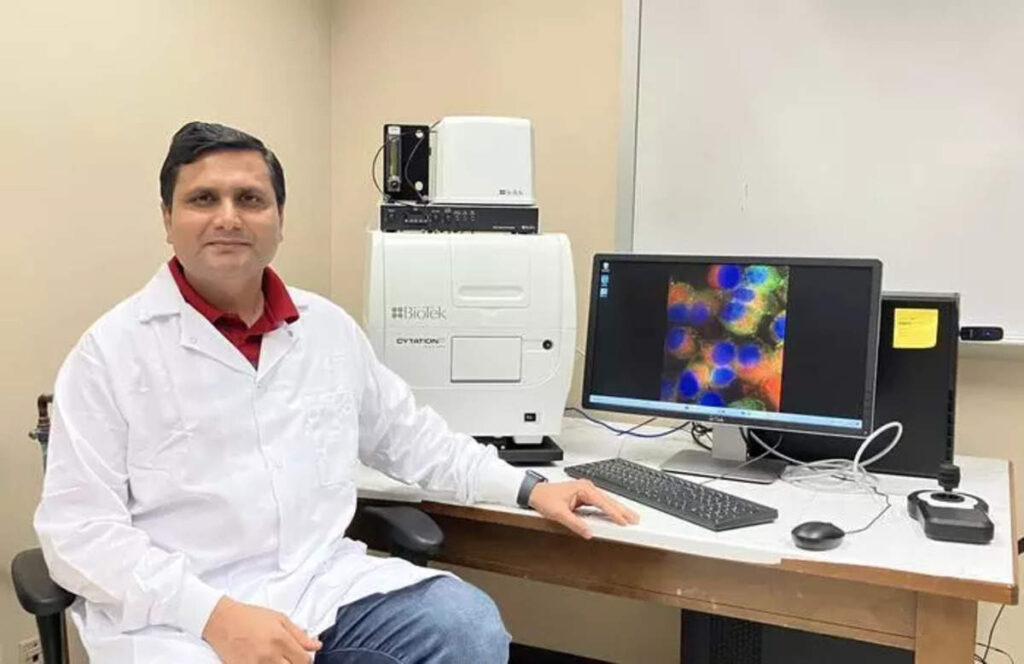
A new study by an Indian-origin researcher has identified 135 new genes associated with pigmentation, which when targeted could help in developing melanin-modifying drugs for vitiligo and other pigmentation diseases. The skin, hair and eye colour of humans is determined by the light-absorbing pigment known as melanin . “By understanding what regulates melanin, we can help protect lighter-skinned people from melanoma, or skin cancer,” Vivek Bajpai , the lead research author, said.
“By targeting these new melanin genes, we could also develop melanin-modifying drugs for vitiligo and other pigmentation diseases,” he added. The researchers found 169 functionally diverse genes that impacted melanin production. Of those, 135 were not previously associated with pigmentation.
The article recently published in the ‘Science’ journal features research by Bajpai, an assistant professor in the School of Sustainable Chemical , Biological and Materials Engineering at the University of Oklahoma , and collaborators from Stanford University. Melanin is produced within special structures called melanosomes, which are found inside melanin-producing pigment cells called melanocytes. Although all humans have the same number of melanocytes, the amount of melanin they produce differs and gives rise to the variation in human skin colour.
“To understand what actually causes different amounts of melanin to be produced, we used a technology called CRISPR-Cas9 to genetically engineer cells,” Bajpai said. “Using CRISPR, we systematically removed more than 20,000 genes from hundreds of millions of melanocytes and observed the impact on melanin production. ” Bajpai developed a novel method to detect and quantify the melanin-producing activity of melanocytes.
By passing light through the melanocytes, he could record if the light was either absorbed or scattered by the melanin inside. “If there are a lot of melanin-producing melanosomes, the light will scatter much more than in cells with little melanin,” Bajpai said. “Using a process called side-scatter of flow cytometry, we were able to separate cells with more or less melanin.
These separated cells were then analyzed to determine the identity of melanin-modifying genes. We identified both new and previously known genes that play important roles in regulating melanin production in humans. ” Historically, darker pigmentation has been needed to protect against ultraviolet radiation in areas closer to the equator and for people who spend hours in direct sunlight.
As humans moved into areas with less direct sunlight or fewer hours of daylight overall, less melanin was needed. Over time, this resulted in melanosomes that produced less melanin, thus absorbing more sunlight. The technology developed and used by the research team could also be applied to identify genes that regulate melanin production in fungi and bacteria.
Melanin production in fungi and bacteria enables them to be more pathogenic to humans or crops. Researchers could develop effective interventions against these microbes and their diseases by discovering and targeting such melanin-producing genes. Bajpai’s role in the study was completed during his professorship at the University of Oklahoma.
However, a portion of this research took place during his postdoctoral research fellowship at Stanford University. Don’t miss out on ET Prime stories! Get your daily dose of business updates on WhatsApp. click here! Sunday, 13 Aug, 2023 Experience Your Economic Times Newspaper, The Digital Way! Read Complete Print Edition » Front Page Pure Politics Bottom Line Deep Dive More Women Queueing Up for Second Innings at Work An increasing number of qualified women professionals who had left their jobs due to maternity, caregiver responsibilities or other personal commitments want to return to the corporate world, according to exclusive data shared with ET by HerKey (formerly JobsForHer), a search portal and career engagement platform for women.
Adani Ports Appoints BDO Auditor after Deloitte Quits Top professional services firm MSKA Associates, an affiliate of BDO International, will succeed Deloitte Haskins & Sells LLP as statutory auditor of Adani Ports & SEZ (APSEZ), according to a statement by the company. Pickleball is New Golf as CEOs Get a Taste of Sport A meeting with a CEO at their sports club used to mean a round of golf. These days, it’s more likely to be a set of pickleball — as the racket sport that’s described as a combination of tennis, ping-pong and badminton picks up devotees like Djokovic picks up trophies.
Read More News on melanin genetic engineering pigmentation university of oklahoma materials engineering vivek bajpai school of sustainable chemical (Catch all the Business News , Breaking News Events and Latest News Updates on The Economic Times . ) Download The Economic Times News App to get Daily Market Updates & Live Business News. .
. . more less ETPrime stories of the day Investing Zomato turns profitable after 15 years: A one-off event or has the tide really turned? 8 mins read Manufacturing PLI helps India close manufacturing gap, but scale still a challenge for electronics and IT hardware 7 mins read Logistics Wheels of change: how non-express logistics firms are trying to catch up with express players 10 mins read Subscribe to ETPrime.
From: economictimes_indiatimes
URL: https://economictimes.indiatimes.com/news/science/indian-origin-researcher-detects-135-new-melanin-genes-responsible-for-pigmentation/articleshow/102699287.cms