
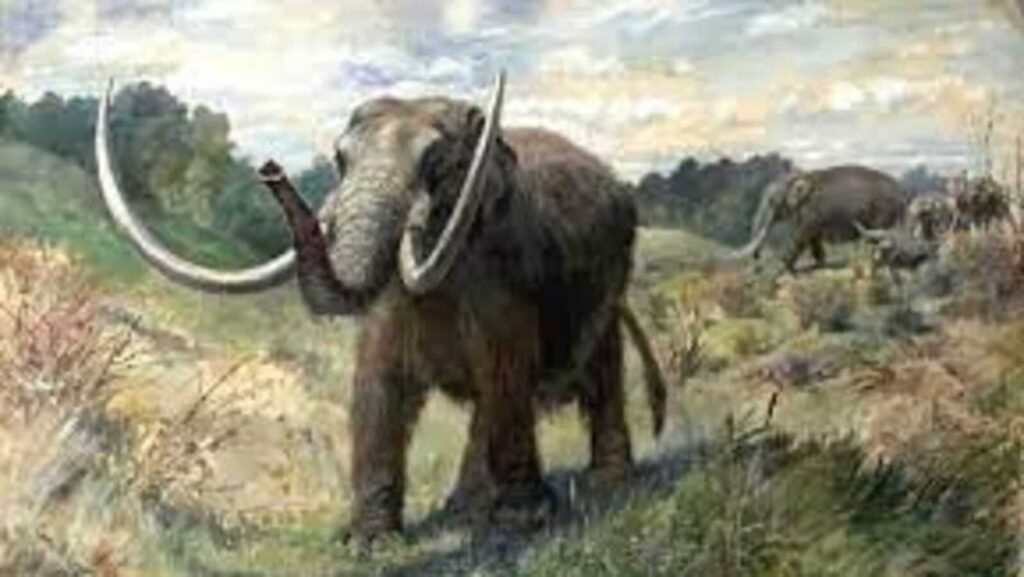
Researchers have found that Mastodons, the forest dwelling animals that are believed to have lived 50,000 to 130,000 years ago, freely roamed in an ecosystem very different than contemporary times Greenland, at east two billion years ago. Mastodons were known to have inhabited North and Central America during the late Miocene or late Pliocene up to their extinction at the end of the Pleistocene 10,000 to 11,000 years ago TRENDING STORIES See All Premium A clear-cut vote marked against complacency Premium Twitter’s advertising truth hurts Premium Horoscope Today: Money astrological predictions for 12t . .
. Premium Air travel becoming preferred mode of mobility: Modi It is popularly known that the Northern part of Greenland is a rather barren scantily populated area and is home to odd hare and musk ox, and few plants. Researchers have found DNA samples that prove that Mastodons roamed in Greenland at least two million years ago.
The researchers recovered the samples from frozen soil. The findings from the study were published in the journal Nature on 7 December. The article describes the ancient-DNA findings1.
The start of findings In 2021, researchers obtained partial genomes from million-year-old mammoth remains from Siberia, shattering the record for ancient- DNA preservation2. But Dalén and other scientists suspected that although DNA degrades into ever-shorter fragments over time, even older sequences could be recovered and interpreted — if the right samples could be found. As it turned out, some of those samples had been sitting in a freezer in Copenhagen since 2006, when Willerslev visited northern Greenland looking for ancient human remains.
While there, the team collected sediment from the region’s Kap København Formation, a 100-metre-thick deposit of frozen mud and sand that built up around 2 million years ago. Over the years, researchers sifted through more than 16 billion DNA fragments — many from modern microorganisms that had contaminated the samples — to identify shards of authentic ancient DNA. MORE FROM THIS SECTION See All Premium Premium Ayush industry witnessing 7 times growth: Modi Premium Premium Europe is hit by shortages of antibiotics Premium Premium Chikungunya: Researchers find potential antiviral as d .
. . Premium Premium Viruses are coming for your holiday season, health offi .
. . Here comes Mastodons When the team matched these sequences to databases of genomes from modern plants and animals — which sometimes differ substantially from those of the organisms’ ancient relatives — a snapshot emerged of Kap København two million years ago.
Greenland was much warmer then, but the researchers did not expect the DNA sequences to reveal forests of poplar, spruce and yew trees such as those now typically found at much lower latitudes, alongside sedges, shrubs and birch-tree species that still grow in Greenland. Kap København’s animal life, detailed in sequences probably from reindeer and mastodons — extinct relatives of elephants — as well as rodents, geese and rabbits, held even more surprises. (Excerpts taken from the article published in Nature) Catch all the Business News , Market News , Breaking News Events and Latest News Updates on Live Mint.
Download The Mint News App to get Daily Market Updates. More Less OPEN IN APP.
From: livemint
URL: https://www.livemint.com/science/news/mastodons-dna-found-in-the-frozen-soil-of-greenland-for-the-first-time-details-here-11670772256179.html