
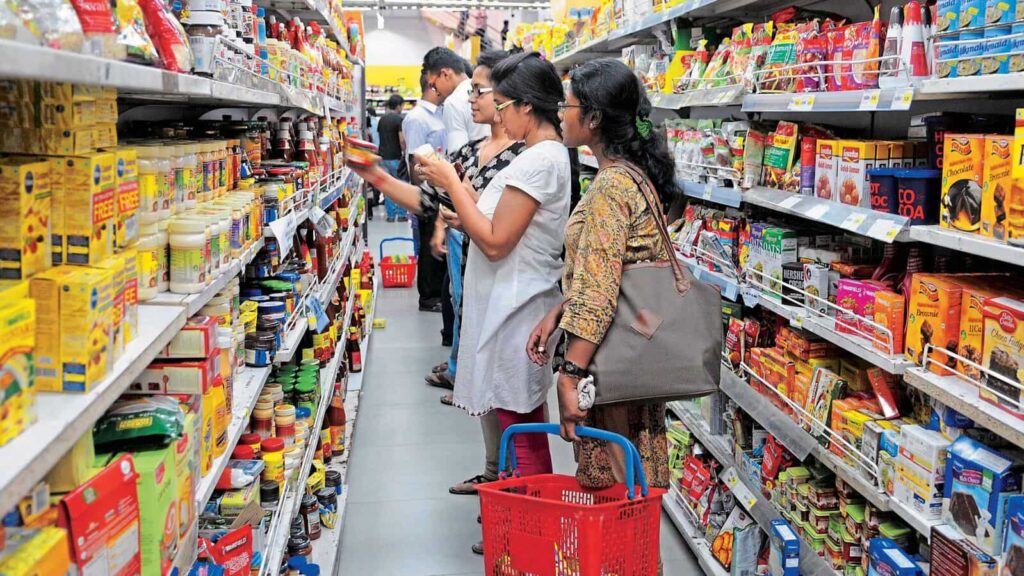
New Delhi: As inflation bites into household budgets, makers of fast moving consumer goods are cranking up availability of low unit packs as well as introducing “bridge packs” to ensure affordability of everything from soaps to biscuits. Two months ago, biscuit maker Parle Products introduced its flagship glucose Parle-G brand as well as crackers at ₹ 15. Snacking brand Cornitos is set to launch a ₹ 50 price point for modern trade stores.
Meanwhile, packaged consumer goods company Hindustan Unilever Ltd. , introduced a Rs16 pack for its soap brand Lifebuoy—a bridge between the ₹ 10 and ₹ 36 pack that are already available in the market. Several companies Mint spoke to as well as analyst reports point to greater consumption of low unit packs or those priced at ₹ 2, ₹ 5, ₹ 10 and ₹ 20—these are popular price packs within the fast-moving consumer goods ecosystem and account for 30% to 40% in terms of revenues for some FMCG categories.
Companies however refrain from taking the price hikes in such packs because it’s easier for consumers to buy products at Rs2, ₹ 5 and ₹ 10 given the easy availability of coins; these products are also popular among low-income groups who value affordability. As a result, companies have also introduced more “bridge” packs priced between ₹ 5 and Rs20—to ensure availability of products across the price pyramid while also accounting for commodity inflation. Companies said taking price hikes or reducing quantity of their entry price packs is becoming increasingly difficult.
“Offering bridge packs is the best way to make consumer move up the price and value ladder,” said Mayank Shah, senior product category manager at Parle Products. To be sure Parle-G is sold at price points of Rs2, Rs5 and Rs10 and higher. With commodity inflation at decadal high manufacturing packs at ₹ 2 or ₹ 5 is also becoming tedious, said manufacturers.
“Whenever you have high inflation and you need to push consumers to buy a bigger back or a higher value you have to introduce bridge packs,” said Shah. The company also introduced a ₹ 15 pack for its Nutricrunch crackers. “The idea is to incentivize the consumer to buy a bigger pack say from ₹ 10 to 20—a Rs15 pack helps with the transition,” he added.
MINT PREMIUM See All Premium Adani-Total targets three birds with one stone Premium 5 stocks near 52-wk high in a weak market. What’s the s . .
. Premium Maruti’s race for market leadership hits a speed bump Premium Stagnant petrol, diesel prices to weigh on the outlook . .
. Cornitos chip maker said it is facing 20-25% inflation on raw materials. It is now introducing a Rs50 pack especially for modern trade stores.
“We cannot take a price hike on the Rs35 pack or keep on reducing the pack size. With the current inflation, what we are offering at ₹ 35 and ₹ 90 we are unable to give offers and provide visibility in these modern stores. As a result, ₹ 50 is the middle path for us,” said Vikram Agarwal, managing director, Greendot Health Foods Pvt Ltd.
FMCG companies, facing a four-decade high-cost inflation, are using a combination of tacts including direct price hikes as well as grammage cuts to counter high raw material prices. “FMCG companies are increasing aggression in bridge packs to combat inflation. For instance, HUL has introduced a Lifebuoy pack at ₹ 16, which is a bridge pack within the ₹ 10 to ₹ 36 price point packs,” analysts at Edelweiss Securities said in a note dated 16 June.
Meanwhile inflation is also prompting households to tighten their monthly spends. As a result, it is common for households to move to lower pack sizes or even switch to cheaper packs to save money. For companies—ensuring availability across price points becomes all the more critical.
“Due to inflation, there has been down-trading across categories and stock keeping units. Having stock keeping units between low unit prices and large packs allows a company to capture some of this down-trading, instead of losing demand to smaller and local brands,” the report said. Through bridge packs, FMCG companies are trying to offer better value to consumer by offering more grammage in these bridge packs versus popular price points, the report added.
Companies are also seeing a greater share of low unit packs. Ankush Jain, chief financial officer, Dabur India Ltd, said the company is focusing on existing low unit packs and affordable packs, which have seen a spurt in demand over the past few months. “We have ramped up supplies of these affordable packs across categories to keep pace the demand growth,” Jain said.
More recently, researcher Kantar noted the number of FMCG packs purchased between February to April increased 15% year-on-year—this indicates that as prices are rising, consumers are balancing that with purchasing smaller packs, it said in its June update on the FMCG sector. TRENDING STORIES See All Premium Karnataka: ACB unearths crores of rupees from gardener’ . .
. Premium Karnataka PUC Result 2022: Class 12 Result at 11. 30 am .
. . Premium Heeraben Modi turns 100 today: PM Modi says this about .
. . Premium ‘India-Canada FTA can be sealed if there is political will’ Subscribe to Mint Newsletters * Enter a valid email * Thank you for subscribing to our newsletter.
First article Close.
From: livemint
URL: https://www.livemint.com/companies/news/packed-consumer-goods-cos-push-lower-unit-packs-as-inflation-bites-11655489063041.html