
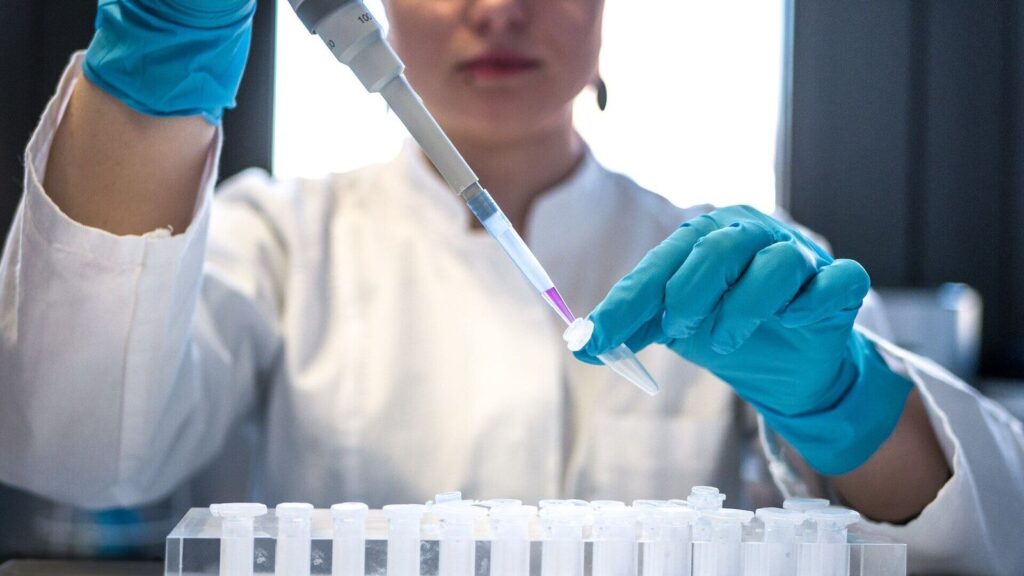
Synthetic human embryos have been successfully developed by scientists using stem cells, marking a groundbreaking achievement that bypasses the traditional reliance on eggs or sperm. These lab-grown structures resemble the earliest stages of human development and offer a valuable opportunity to study genetic disorders and the underlying causes of recurrent miscarriage. The creation of these model embryos, however, presents significant ethical and legal dilemmas as they currently fall outside the scope of existing regulations in the UK and most other countries.
While they lack a beating heart or the beginnings of a brain, they do contain cells that would typically give rise to the placenta, yolk sac and the embryo itself. Leading the way in this pioneering research is Prof Magdalena Żernicka-Goetz, affiliated with the University of Cambridge and the California Institute of Technology. Speaking at the International Society for Stem Cell Research’s annual meeting, she described how human embryo-like models can be produced by reprogramming embryonic stem cells.
Also Read: Can supernova help us make contact with aliens? Space scientists think so It should be noted that the use of synthetic embryos for clinical purposes is not imminent. Implanting them into a patient’s womb is currently illegal, and it remains uncertain whether these structures have the potential to progress beyond the earliest stages of development, The Guardian reported. The primary objective of this work is to shed light on the “black box” period of human development, which is limited to 14 days under current regulations.
Scientists are eager to comprehend the intricacies of early embryonic development and identify potential abnormalities without having to rely solely on pregnancy scans and donated embryos. Also Read: UK to enhance science and innovation ties with India The latest breakthrough builds upon previous advancements achieved by Żernicka-Goetz’s team and a competing group at the Weizmann Institute in Israel. These earlier studies successfully prompted self-assembly of mouse stem cells into embryo-like structures featuring an intestinal tract, the rudiments of a brain, and a beating heart.
Since then, multiple teams have made progress in replicating the earliest stages of human developmen. ABOUT THE AUTHOR Sounak Mukhopadhyay Sounak Mukhopadhyay, who also goes by the name Sounak Mukherjee, has been producing digital news since 2012. He’s worked for the International Business Times, The Inquisitr, and Moneycontrol in the past.
He’s also contributed to Free Press Journal and TheRichest with feature articles. He covers news for a wide range of subjects including business, finance, economy, politics and social media. Before working with digital news publications, he worked as a freelance content writer.
Read more from this author Catch all the Business News , Market News , Breaking News Events and Latest News Updates on Live Mint. Download The Mint News App to get Daily Market Updates. More Less Updated: 15 Jun 2023, 07:21 AM IST.
From: livemint
URL: https://www.livemint.com/science/news/scientists-develop-synthetic-human-embryos-here-s-what-the-groundbreaking-development-intends-to-achieve-11686793360150.html