
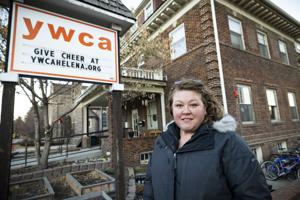
Jen Gursky at YWCA Helena has grown frustrated as delays from the state have held up $75,000 in grant funding to reimburse the organization for services it has already provided to single mothers and their children in recent months. “This has real-life ramifications, specifically for the 22 women and 24 children in our shelter,” Gursky said in a recent interview. Like other providers, federal grant money awarded to the YWCA Helena is administered through state agencies.
In the YWCA’s case, that money is for innovative child care offerings and programs for pregnant and postpartum women. But a new, more scrutinized contract renewal process at the state level has caused delays in getting that grant money out the door. A “few dozen” providers, according to the state, are waiting on money as the need for services remain.
State agencies say they are combining resources to help address the backlog. As of Jan. 2, 31 contracts are still delayed in the renewal process, according to the Montana Department of Public Health and Human Services.
That’s out of 726 contracts up for renewal from June 30 to Dec. 31. The contracts still delayed amount to $2.
5 million. In this arrangement, community-based programs have to deliver services and then submit invoices to the state for reimbursement of those costs. Through the end of December, Gursky said the state owes YWCA Helena $75,000.
The YWCA is a licensed substance-use disorder recovery home, where mothers get mental health therapy, addiction counseling and group therapy. Of the three federal grants the YWCA receives, only two have been delayed. One grant comes through the Board of Crime Control; the YWCA saw no gap in those payments.
A second contract recently cleared the process, releasing funds for their October invoice, but November and December reimbursements remain unpaid, Gursky said. The third contract has yet to be finalized by the state, so invoices sent by YWCA since August have gone unanswered. Gursky suggested an irony at play when considering the state’s , allocated $300 million by the state Legislature, to approach an overhaul of Montana’s mental health system.
“You have a commission trying to identify the gaps in mental health service delivery around the state and come up with solutions,” Gursky said. “Well, here’s one: Pay your bills. ” The second and third contracts are routed through the DPHHS.
In the administrative pipelines through which these grant dollars flow, the Department of Administration often handles contract renewals. Spokesperson Megan Grotzke said the Department of Administration has made contract procurement reform an objective and recently emphasized the importance of legal review in agency contracts. “The Department of Administration is aware of some recent contract delays related to the Department of Public Health and Human Services,” Grotzke said in an emailed response to questions last week.
Spokespeople for both agencies said the reasons for the delays included higher-than-normal contract volumes, turnover in contract review staff and a “heightened legal review” by DPHHS. Asked why DPHHS initiated more legal review into that process, DPHHS spokesperson Jon Ebelt pointed to DOA’s earlier response about about “the importance of legal review. ” Sarah Corbally is president of the board of directors at Florence Crittenton, another social services provider in Helena.
Last month, she raised the delays at an interim legislative committee, saying other providers are getting “nervous” about the potential impact on services. “Some of the other home-visiting providers are having difficulties getting their contracts signed,” Corbally, herself a former division administrator at DPHHS, told the public health budget subcommittee. “We’ve provided services for October and November and December and we still don’t have payments for those contracts in place.
Just another thing that maybe we could help address in terms of not letting families go without services. ” In a phone interview following that Dec. 13 legislative committee hearing, Corbally said Florence Crittenton is still waiting on $56,000 in contracted funding.
Those dollars are earmarked for staff providing family services to moms and babies. Another kink in that process, according to DPHHS and DOA, is the downstream effects of House Bill 356, passed by the Legislature last year, which requires providers to attest in writing they won’t discriminate against “firearm entities. ” “With support from the (DPHHS) and DOA, contractors needed time to understand the law’s new requirements and many contracts need to be amended accordingly,” Ebelt said in an email.
The bill, sponsored by Rep. Brandon Ler, R-Savage, requires the pledge not to discriminate against “a firearm entity or firearm trade association” from companies or organizations that have 10 or more employees and are seeking a contract worth at least $100,000. Gursky said the YWCA, which does not allow firearms on its premises, signed that attestation understanding that it won’t require them to change their firearm policy.
There’s very little chance, she said, that YWCA would come in contact with a firearms entity or trade association during the term of their contract. And if the YWCA’s attestation caused a delay in the state signing its contract, she said no one has raised that issue with her. “There’s a clear communication responsibility,” Gursky said of the delays.
“The government has contracted with on-the-ground workers and whatever the hiccup is, they have the responsibility to explain themselves and that has not been done. ” The Montana State News Bureau has filed a public records request for responses from community providers to the Department of Administration regarding delays in the contract renewal process. .
From: helenair
URL: https://helenair.com/news/state-regional/government-politics/montana-ywca-social-services-providers-dphhs-legislature-helena-florence-crittenton/article_54b77f40-a9b3-11ee-8698-5f3e6e186674.html