
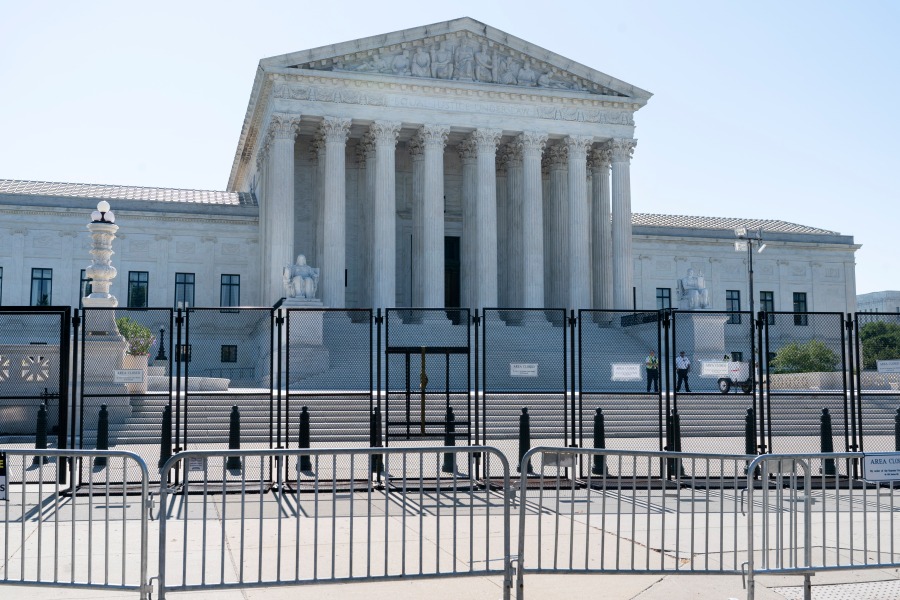
OKLAHOMA CITY (AP) — The U. S. Supreme Court has released a decision on an ongoing battle with Native American tribes over the state’s authority to prosecute people accused of crimes on Native American lands, following a 2020 Supreme Court decision.
The court agreed earlier this year to consider limiting its 2020 McGirt decision, a ruling that the state says has produced chaos in its courts. Oklahoma man charged with second-degree murder violates bond conditions The state’s appeal is in the case of Victor Castro-Huerta, who was charged with malnourishment of his 5-year-old stepdaughter and has since pleaded guilty to a federal child neglect charge and is awaiting sentencing. He was initially convicted in state court but that conviction and his sentence were overturned because of the way the state courts interpreted the law in the aftermath of the McGirt ruling.
The state appealed with the strong support of Republican Gov. Kevin Stitt and is the latest strain on his relationship with tribal leaders in the state. In the 2020 case, the Supreme Court ruled that a large chunk of eastern Oklahoma remains an American Indian reservation.
The ruling applied to the Muscogee reservation, but led to similar lower court rulings upholding the historic reservations of several other Native American tribes in Oklahoma, including the Cherokee, Chickasaw, Choctaw, Quapaw and Seminole nations that cover nearly the entire eastern half of the state. 68-year-old woman who suffered multiple broken bones in OHP arrest now facing multiple charges The decision, written by Justice Neil Gorsuch, meant that Oklahoma prosecutors lack the authority to pursue criminal cases against American Indian defendants in parts of Oklahoma that include most of Tulsa, the state’s second-largest city with a population of about 413,000. Stitt said during his State of the State speech in February that “Oklahoma has been robbed of the authority to prosecute crimes.
” The Supreme Court does not typically reconsider its decisions so soon. But the state argued that crimes are going uninvestigated and unprosecuted because federal authorities — who can bring criminal cases on tribal land — are overwhelmed. The Supreme Court ruled on Wednesday that Oklahoma can prosecute non-Native Americans for crimes committed on tribal land when the victim is Native American.
The 5-4 decision cut back on the high court’s ruling from 2020 that said a large chunk of eastern Oklahoma remains an American Indian reservation. Stitt and tribal leaders previously clashed over Stitt’s desire to renegotiate tribal gambling compacts that he claimed were expiring. Federal and state courts ruled against Stitt in lawsuits over the gambling question.
Last year, Stitt decided to not renew hunting and fishing license compacts with the Cherokee and Choctaw nations as part of an ongoing dispute between the tribes and the Republican governor. Oklahoma Attorney General John O’Connor released the following statement after the ruling: “Today, the U. S.
Supreme Court stood up for the safety of Oklahomans of native American heritage in eastern Oklahoma. The Supreme Court recognized Oklahoma’s sovereignty and jurisdiction to prosecute non-Indians who commit crimes against Indians in eastern Oklahoma. Federal prosecutors are only prosecuting one in four felony referrals from law enforcement officers in eastern Oklahoma.
Now the State prosecutors can take up the slack and get back to what we have been doing for 113 years. The Biden DOJ predicted a “surge” in crime in eastern Oklahoma in 2023. With this decision, hopefully that surge can be avoided.
This decision significantly limits the impact of McGirt. It vindicates my office’s years-long effort to protect all Oklahomans—Indians and non-Indians alike—from the lawlessness produced by the McGirt decision. While we still have a long road ahead of us to fix all of the harms our State has experienced as a consequence of McGirt, this is an important first step in restoring law and order in our great State.
As we move forward, Oklahoma welcomes the opportunity to continue to work with our tribal and federal partners from both the eastern and western sides of the state. As those that brought our Great State together knew, Labor Omnia Vincit – labor conquers all things. It will take hard work and an unwavering willingness to do the right thing for the right reasons to ensure every Oklahoman, regardless of ancestry, receives equal justice under the law.
”Oklahoma Attorney General John O’Connor.
From: kfor
URL: https://kfor.com/news/local/supreme-court-limits-2020-ruling-on-tribal-lands-in-oklahoma/