
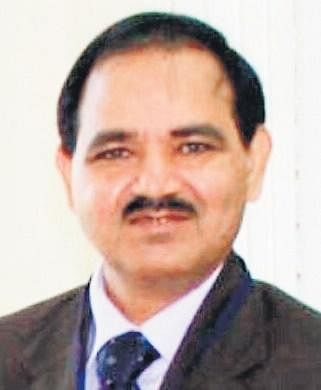
Gufran Beig, founder and project director of System of Air Quality and Weather Forecasting and Research (SAFAR) run under the aegis of the Union government and now a chair professor at the National Institute of Advanced Studies (NIAS) Bengaluru, spoke to Ifrah Mufti about the air quality of the national capital and what the government needs to do about it. Edited excerpts: It was huge. It was nearly 44% this year, considered to be the highest so far.
If we consider the fire counts in 2022 and 2023, the number declined last year and it has further declined this year. We have made a sensitive study in regard to preponing the stubble burning and finishing the harvesting by September so that it does not impact the air quality of Delhi since the winds are faster during that time. Stubble burning started late this time when the cooler conditions were setting in and the emission level was going down even as calm conditions were prevailing.
There was a sudden surge in the 2. 5 PM levels which continued till November 9. It only stopped when it rained on the 9th.
During November, the air quality in general remains in the upper end of very poor while now in this month only, due to any source — be it stubble burning, fire crackers anything else — it was rising to severe level. Stubble burning has been adding fuel to the fire. It is not the only reason but had it not been there, the air quality may not have gone bad to this extent.
It is not the only reason but one of the reasons responsible for bringing it to the peak. The government did take a lot of measures like invoking GRAP 3 and 4. But the Delhi air quality problem is not a local problem; it is an airshed problem.
Air shed is an approach where the air quality of some place is influenced by some particular reason — emissions, industries etc. — extended to air shed regions, thus the impact of these measures would be marginal. CAQM measures are only a quick fix, which can reduce the peaks, but Delhi needs long term sustainable solutions instead of cosmetic solutions.
Normally what happens is that when the rains are significant, they wash away the pollutants. If there is no significant rain and only drizzles, then it works adversely because water molecules just hang in the air. These hanging molecules will provide the surfaces for the particulate matter to multiply.
Sufficient rainfall is required for improving the air quality or else it may worsen the situation otherwise. We know the problem, we know the solution. There should be two things — implement long term strategy on scientific feedback, rather than on political decisions.
Secondly, Delhi NCR officials should sit together and strategize the plan and handle it at scientific level rather than making a political agenda. No. Firstly, cloud seeding is an expensive proposition.
It has to be well thought of before executing it. For cloud seeding, you need to have a cloud. Then, you have to inject the cloud to liquidate it, only then it will pour.
Another thing is all kinds of clouds can’t give you rain. Normally such clouds are not found in this particular season. .
From: newindianexpress
URL: http://www.newindianexpress.com/cities/delhi/2023/dec/01/sustainable-steps-needed-to-deal-with-air-pollution-scientist-2637729.html