
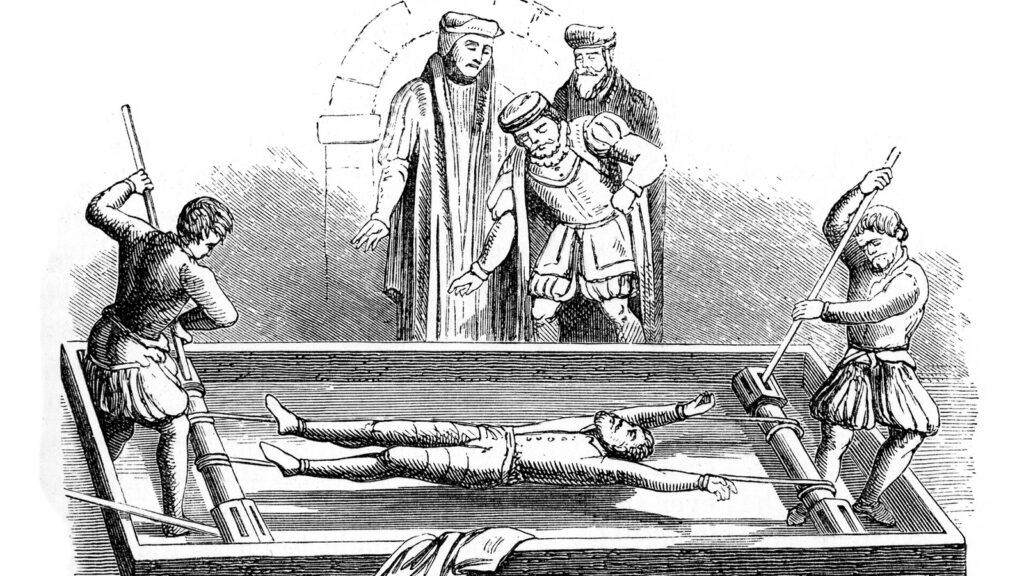
In 2000, group Amnesty International and African social sciences organization CODESRIA (Council for the Development of Social Science Research in Africa) published a handbook for watchdog groups monitoring prisons with suspected torture. The guide offers insight into just what qualifies as cruel, inhuman and degrading (CID) treatment. The book also discusses the , among them beatings, shocks, hanging a person by the limbs, mock executions and forms of assault, especially rape.
In this article, we focus on the unfortunate realities of these practices around the modern world, not like the brazen bull or breaking wheel. Advertisement In addition to Amnesty International’s list, we’ll also look at what Boston Center for Refugee Health and Human Rights cites as five common forms of torture, including burns, penetrating injuries, asphyxiation, forced human experimentation and traumatic removal of tissue and appendages. According to , torture is “when somebody in an official capacity inflicts severe mental or physical pain or suffering on somebody else for a specific purpose.
Sometimes authorities torture a person to extract a confession for a crime or to get information from them. Sometimes torture is simply used as a punishment that spreads fear in society. ” Torturers inflict immense pain on others through various methods, including the use of torture devices, getting into a victim’s head or having a person stripped naked or hung upside down.
Advertisement Most of these endured horrors are physical, or black torture. Mock executions are white torture (psychological) [source: ]. There’s little distinction between black-and-white forms of torture; both are equally insidious.
As the humanitarian group SPIRASI (Spiritan Asylum Services Initiative) puts it, “Methods of physical and psychological torture are remarkably similar, such that one should not separate their effects from each other” [source: SPIRASI]. Is Torture Illegal? International law bans and condemns torture, but that doesn’t mean it doesn’t exist. However, more than 150 countries follow the , which states, “No one shall be subjected to torture or to cruel, inhuman or degrading treatment or punishment.
In particular, no one shall be subjected without his free consent to medical or scientific experimentation. ” Among the many stories of abuse from Moammar Gadhafi’s regime emerging from Libya in the summer of 2011, the details of Shwygar Mullah’s torture proved especially heart-wrenching. Shwygar was working for Moammar’s son Hannibal as a nanny for his two children when, she says, Hannibal’s wife, Aline, became upset with her for not keeping the couple’s children quiet.
In her rage, Aline allegedly brutally burned Shwygar with boiling liquid. Today, burns cover Shwygar’s entire body, leaving her face nearly unrecognizable. Advertisement Her story is a testament to the pain and lasting scars — both emotional and physical — that burn victims suffer, and yet it remains a common and established torture technique.
In fact, evidence of the practice dates back to 2000 B. C. E.
when criminals were branded with marks that forever testified to the crimes they’d committed [source: Kellaway]. More recently, specialists from Stockholm’s Centre for Torture and Trauma Survivors found that out of 83 political refugees tortured in Bangladesh, 78 percent suffered burns, inflicted on them with cigarettes, hot water or an iron [source: Edston]. Torture victims can also suffer burns from exposure to chemicals or extreme cold.
These wounds are particularly susceptible to infection if not properly treated, and victims often carry the scars from their torture for the rest of their lives. All torture is horrific, but penetrating injuries like stab wounds and gunshots can be particularly traumatic. A Boston University study showed that such injuries stand out among modes of torture for leaving lasting neurological damage.
Those findings make perfect sense; guns and knives are capable of inflicting severe internal damage, often in ways the perpetrator didn’t intend. Although gunshot wounds might occur when capturing a person, penetrating injuries are a methodical form of torture. Bullets and knife wounds can separate the spinal cord, for instance, or destroy a victim’s limbs, ligaments and tendons, causing permanent disabilities.
Advertisement What’s more, victims often don’t receive the necessary medical care, leading to infection and poor healing. The nonprofit organization International Society for Human Rights reports that in China, victims have dealt with bamboo torture, where the plant pierces their fingertips or other parts of the body. A torturer might also use needles and other sharp objects to push through the skin on their backs and their eardrums ruptured with small sticks.
Examination of previously mentioned refugees from Bangladesh revealed numerous wounds from “sharp violence” as well. In fact, 79 percent of the group studied suffered wounds inflicted by knives, swords, needles and glass, among other instruments of pain [source: Edston]. Suffocating is frightening enough, but recent research reveals a physiological reason for its effectiveness as a method of torture.
Researchers from the University of Iowa found that when mice breathed air with increased levels of CO — the same gas that builds up in people when they suffocate — the mice responded by freezing in place. Upon further study, the researchers discovered that increased levels of CO produced higher pH levels in the mice, triggering a strong response in the part of their brains wired for survival [source: Wilcox]. Advertisement These studies might explain why, besides the obvious reasons, we panic when we’re deprived of oxygen and, by extension, why asphyxiation is such a brutal method of torture.
The torturer can cut off the victim’s air supply in a number of different ways. Asphyxiation can cause seizures and loss of consciousness, and unlike some other forms of torture, it always has the potential to kill the victim. Other possible long-term effects include chronic bronchitis resulting from inhaling liquids, as well as permanent leading to or even .
The Spanish Inquisition — which also used starvation, capital punishment and a torture rack — practiced . The process involves an interrogator placing a wet rag in a victim’s mouth that they pour water onto to mimic the sensation of drowning. Many of the methods from that time have come to shape .
For example, in the early 2000s, the Bush administration denied that waterboarding was torture. However, Cullen Murphy, author of “God’s Jury: The Inquisition and the Making of the Modern World” argued, ” was actually very clear on the matter. It obviously was torture.
That’s why they were using it. ” While torture is often used to extract information from victims, the next form of torture on our list takes this concept to a terrifying new level. We often think of torturers as thugs and bullies armed with crude but effective implements of pain, but the perpetrators of forced are much more sophisticated in their approach.
Practitioners sometimes pursue goals like curing disease or advancing our understanding of the human body, but their methods are abhorrent. Perhaps the most infamous examples of human experimentation occurred throughout World War II, carried out by Japan’s and by doctors working in Germany’s concentration camps. Unit 731 used prisoners of war as human guinea pigs, infecting them with horrific diseases and dissecting living victims in an effort to develop deadly biological weaponry.
Advertisement These experiments killed an estimated 10,000 prisoners, and testing of the on Chinese villages resulted in an additional 300,000 deaths [source: ]. Experiments carried out by Nazi doctors were no less horrifying. They pushed prisoners of concentration camps up to — and sometimes beyond — the limits of survival.
Victims forcibly sat in icy water for hours, were infected with all manner of diseases and endured wounds mimicking those received on the battlefield. Doctors then would treat victims with reckless, painful procedures that often ended in death. While the atrocities committed during World War II stand out for the sheer scale and cruelty of the experiments, forced human experimentation has taken place for thousands of years.
Ever since those early days, opponents of the practice have debated whether the larger scientific community should use insight gained through human suffering. We’ve explored some of the atrocities committed by Nazi doctors, but we haven’t examined one of their most gruesome efforts: limbs and tissue. Victims had their arms, legs and other body parts removed in horrifying fashion.
Doctors then attempted to transplant these body parts to other victims, but the results were equally gruesome, leaving everyone involved disfigured and fighting for their lives. Advertisement Amputation and tissue removal have long been used as forms of torture. Torturers commonly remove fingernails, teeth and digits from victims, but any body part could be a target.
A traditional form of punishment has involved removing from a criminal the body part that the person used to commit a crime. Throughout the Middle Ages, for instance, criminals in Britain would face amputation of hands, ears and other body parts by executioners, and the practice isn’t by any means obsolete [source: Kellaway]. In 2007, for instance, an Iranian man had four of his fingers amputated after being convicted of multiple robberies [source: New Zealand Herald].
The physical pain and lifelong impairment such torture brings is only part of the punishment; such amputees can also become social pariahs because of their wounds. One Danish study of 69 refugees found that 97 percent of survivors reported being beaten at the hands of their captors [source: Olsen et al. ].
“Beatings are universal, although implements may vary,” write authors Michael Peel and Vincent Iacopino in “The Medical Documentation of Torture. ” Beating can be as simple as punching, slapping or kicking a victim. It may come spontaneously or in conjunction with other methods.
Captors may also deliver beatings with any manner of blunt weapons. Advertisement There are some specific methods for this kind of torture, too. The falanga (or , depending on the geographical region) method involves beating the soles of the feet.
This type of torture can leave a victim’s feet insensitive to touch and temperature and cause lasting, severe pain, as well as an altered gait while walking [source: ]. Electric shock torture methods haven’t been around as long as many other widely used methods — humans didn’t figure out how to harness until the late 19th century. Once established, however, electricity soon came into use as a method of torture.
“Americans didn’t just develop electric power,” writes torture expert Darius Rejali in The Boston Globe, “they invented the first electrotorture devices and used them in police stations from Arkansas to Seattle. ” Advertisement Electrical shocks can be delivered using , cattle prods and electroconvulsive therapy (ECT) devices. This type of torture device can be as crude as introducing a current to a victim via a cattle prod or other shock-delivering instrument attached to a car battery.
Shocks are a torture method because they’re cheap and effective. What’s more, shocks tend to leave behind little obvious physical trace of the agony they produce. Rape is a common form of torture, especially during wartime.
Rape of men, women and children has occurred during conflicts across the globe. In the Balkan Wars of the 1990s, Serb soldiers assaulted Muslim Bosnian women. In the Congo, from 2000 to 2006 alone, more than 40,000 women and children were victims of rape [source: ].
In Rwanda in the early 1990s, an estimated 25,000 women were raped. Advertisement Soldiers reportedly told their victims that they were “allowed to live so that they will die of sadness” [source: ]. Both men and women may suffer sexual assault.
Whether the assaulter uses his or her body to inflict harm or brandishes a device to penetrate the victim’s body, the act constitutes as rape. What’s more, experts believe estimates of the number of men who’ve endured rape torture are low, as men may be more reluctant to report such episodes [source: ]. While sexual assault has a specific definition, some experts assert that all torture is a form of rape because it violates the victim’s body.
During the Vietnam War, the Viet Cong employed a form of torture called “the ropes. ” In “Human Adaptation to Extreme Stress: From the Holocaust to Vietnam,” the book’s authors describe this type of torture many American servicemen faced after capture, explaining, “Although there were many variations of this torture, it usually took the form of tying the elbows behind the back and tightening them until they touched or arching the back with a rope stretched from the feet to the throat” [source: Wilson et al. ].
The tension created in the muscles by this extreme tightening — exacerbated by hanging victims from their limbs — can cause lasting nerve damage. Police tortured dissident Turkish national Gulderen Baran when she was in her early 20s. In addition to other forms of torture, they hung her by her arms, both on a wooden cross and from her wrists bound behind her.
Baran suffered long-term damage to her arms, losing strength and movement in one arm, and the other suffering total paralysis [source: Amnesty International, U. S. Dept.
of State]. In 1849, famed Russian author Fyodor Dostoyevsky found himself facing death by firing squad for his political activities. But death never came; it was a staged execution, and Dostoyevsky instead found himself headed to a labor camp in Siberia.
His mock execution seems to have affected him for the rest of his life, however. Many of his later novels focused on criminals, violence and forgiveness, all subjects very familiar to the author. Needless to say, Dostoyevsky’s experience wasn’t unique.
Mock execution methods are any situation in which a victim feels that his or her — or the death of another person — is imminent or has taken place. It could be as hands-off as verbally threatening a detainee’s life or as dramatic as blindfolding a victim, holding an unloaded gun to the back of his or her head and pulling the trigger. Any clear threat of impending death falls into the category of mock executions.
, the method of simulated drowning, is also an example of mock execution. The Field Manual expressly prohibits soldiers from staging mock executions [source: Levin]. But reports of some U.
S. military members staging these executions have emerged from the Iraq War. For example, in 2005, one Iraqi man questioned for stealing metal from an armory was tortured by being asked to choose one of his sons to die for his crime.
When his son was taken around a building, out of the man’s sight, he was led to believe that they executed his son when he heard gunshots fired. Two years earlier, two Army personnel were under investigation for staging mock executions. In one circumstance, an Iraqi was taken to a remote area and made to dig his own grave, and soldiers pretended he would be shot [source: AP].
The U. S. military is not the only group to violate international law regarding mock executions as torture.
In 2007, Iran’s Revolutionary Guard captured 15 Britons. After their second night, the prisoners lined up facing a wall, blindfolded and bound. Behind them, the detainees heard guns cocked, followed by the clicks of firing hammers falling against nothing [source: ].
Despite bans against them, mock executions continue as a means of torture — perhaps because of their effectiveness in breaking a detainee’s will. The effects of such threats on the victim’s life are deep and lasting: The Center for Victims of Torture reports that torture victims who’ve undergone mock executions described flashbacks in which they felt as though they had already died [source: CVT]. .
From: howstuffworks
URL: https://science.howstuffworks.com/five-forms-of-torture.htm