
Just a month ago, the Federal Reserve raised interest rates by a half percentage point for the first time in 22 years as it stepped up its attack on accelerating inflation. On Wednesday, the U. S.
central bank raised rates by another three-quarters of a percentage point. It hadn’t done that in 28 years since the advent of the first tech boom, reflecting a widespread sense that inflation is out of control — and, some say, beyond its control. The Russian invasion of Ukraine has exacerbated inflation at the grocery store, where food costs are at a 40-year high.
At the pumps, the conflict has driven average Los Angeles gas prices to $6. 44 for regular. Lingering pandemic-related supply snarls have caused sticker shock in auto showrooms.
And a nationwide housing shortage particularly acute in California has seen prices skyrocket in markets as far-flung as Boise, Idaho. Federal Chair Jerome H. Powell had signaled in May that additional, steady half-point hikes were likely this month and again in July at the bank’s policy meetings as it sought to rein in inflation without causing a recession — a so-called soft landing.
But since then, the notion that inflation was under control fell apart. The government’s latest inflation report on Friday showed that consumer price inflation in May rose to 8. 6%, the highest level since December 1981.
The stunning figures sent the crypto and stock markets into a tailspin, with the Dow sinking nearly 900 points on Monday and the Standard & Poor’s 500 falling into bear-market territory, more than 20% off its peak. “Given last Friday’s very ugly inflation report, they are stepping hard on the brakes,” said Mark Zandi, chief economist of Moody’s Analytics. “Broadly, they want to raise rates fast enough and high enough to slow the economy’s growth and quell inflation but not too far, too fast so it pushes the economy into a recession — and that’s a very thin needle to thread.
” Some economists thought the Fed could even have gone higher than its 75 basis points, or percentage of a point hike, though it would have been bitter medicine indeed, driving up credit card rates, car loans, home equity loans and home mortgages even higher. “Even with a 75-basis-point reduction in the interest rates, the U. S.
Fed is way behind the curve in tackling inflation. An interest rate hike of 100 basis points would have been ideal, and a slower rate hike than this would mean that the Fed will continue feeding into inflation,” said Willem H. Buiter, an adjunct professor at Columbia University and former member of the Bank of England’s monetary policy committee.
The Fed’s decision is likely to increase rates on adjustable-rate mortgages, but the impact is less clear for fixed-rate mortgages such as the popular 30-year fixed loan, which has already baked in rising inflation rates. The 30-year mortgage rose from around 3% in January to above 5% last week. By some measures, rates even topped 6% as of Monday.
The sharp rise in borrowing costs has caused some home buyers to think smaller and priced others out of the market altogether, causing home sales to fall. Business In a significant shift in the market, fewer homes are going into escrow, inventory is rising and sellers are increasingly cutting their asking prices. With less demand, more home sellers are dropping their asking prices and the real estate industry itself is starting to feel the effects.
On Tuesday, both Redfin and Compass real estate brokerages announced they were laying off 8% and 10% of their workforces, respectively. For months, mortgage lenders have also shed staff, including big names such as Wells Fargo and Mr. Cooper.
As the housing market slows, more losses could be on the way. “I speak to so many CEOs and they are all saying the same thing,” said David Stevens, chief executive of Mountain Lake Consulting and former head of the Mortgage Bankers Assn. “They are going to have to rightsize their companies.
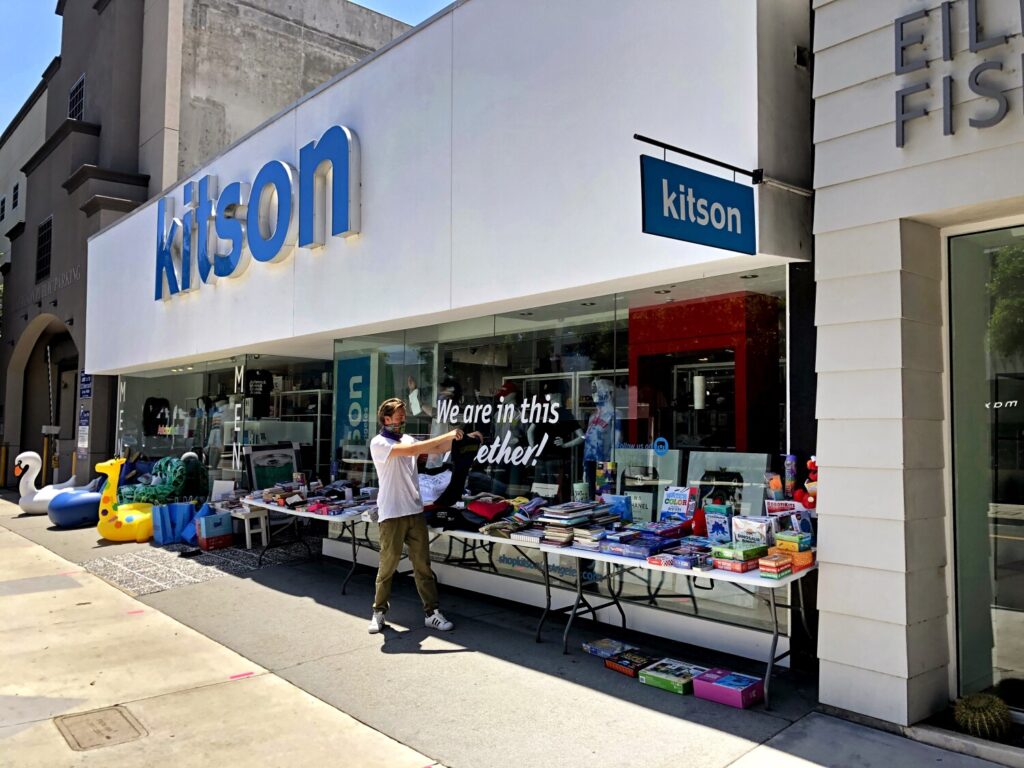
” Credit card rates also will rise since they are tied to the prime rate charged by banks to their best customers, a rate that is itself linked to the federal fund rate. Having to deal with a big rise in credit card rates, after the pandemic, lockdowns, the loss of tourists and supply chain woes is like having “another survival challenge,” said Fraser Ross, owner of the Kitson stores in Los Angeles and Pacific Palisades. Over the years, Kitson made a name for itself as a tastemaker, discovering and launching new brands that became trendsetters.
But it’s a more difficult business now, and higher credit card rates for customers won’t help. “You can’t plan your business six months out anymore. It’s more like six weeks,” Ross said.
“You have to chase your customers now with the top sellers that people will want no matter what. They’re always going to have to buy for the new baby, so we’re going to be pushing those things. People are not going to stop buying birthday presents.
But are they going to buy that cashmere sweater for $400? No. ” Early this month, the quarterly UCLA Anderson Forecast — citing the war, COVID lockdowns in China, supply chain constraints and inflation — predicted the economy will slow in California and across the nation but not fall into a recession, with U. S.
economic growth hitting 2. 8% this year and falling to 2% next year. Forecast Director Jerry Nickelsburg said that while the policy is to not tweak the forecast between quarters, he acknowledged there has been “increased uncertainty about the economy” since it was issued just two weeks ago.
“So the Federal Reserve is trying to figure out how to use interest rates to cool demand for housing and cars without sending the economy into a tailspin and there’s no magic formula for doing that,” he said. The economy added 390,000 jobs in May, more than many analysts expected. However, there have been growing numbers of layoffs in Silicon Valley and the broader tech industry as weak startups falter.
Now, with rising interest rates rising, there isn’t cheap money to prop them up. Layoffs and slowdowns in hiring has even affected big names such as Meta, Twitter and Netflix and prominent startups such as Carvana and Robinhood. Business Residents of the Los Angeles area are changing how they eat, shop and do business to cope with some of the nation’s highest gas and housing prices.
Nickelsburg said that while the California tourism industry is still suffering from pandemic-related traveling restrictions and rising gas prices could discourage out-of-state visitors this summer, the state is well-positioned to withstand economic shocks, with Sacramento having access to a rainy day fund and a large budget surplus. California also will benefit from federal spending on infrastructure and defense, while the continuing backlog at its ports means the logistics industry should continue hiring. While housing costs will rise, he said the state’s overheated market can withstand it.
Sellers of single-family homes may get two offers instead of 10, he noted, while multifamily building will remain strong. “Interest rates are not as important in these circumstances than if you had lower occupancy and kind of squishy rental rates,” he said. Nevertheless, rising inflation has given reign this month to rising anxiety, with entrepreneur Elon Musk saying he had a “super bad feeling” about the economy and JP Morgan Chase Chairman Jamie Dimon telling investors to prepare for an economic “hurricane” due to interest rate increases and Russia’s war in Ukraine.
The crash in the cryptocurrency and stock market, which has given back all the gains of the Biden administration, has done little to quell those feelings — with the realization dawning that much of those gains may have been artificially driven by $5 trillion in pandemic-related government spending, leading to the crypto surge, meme-stock phenomenon and excesses in the now-collapsed market for SPACs. Nevertheless, not all asset managers and investors are predicting the worst. George Ball, chairman of Sanders Morris Harris, an investment firm based in Houston, with $4.
9 billion in assets under management, said investors who have been in the market for years are still showing large gains — and can withstand further drops in the market, with the S&P 500 closing Tuesday at 3,735. 48. “I spoke with one sophisticated investor yesterday, who was bemoaning all the money that his institution had lost this year — and they’re still up 80% over the last four years.
People just don’t feel good about things,” he said. “However, the force 4 hurricane, that some prognosticators anticipate, is very unlikely to happen. It’s going to be something between a tropical storm and a tropical depression.
A drop in the S&P to 3,300 would not be either unlikely nor a calamity. ” Still, key for the Fed, the market and economy will be turning around consumer sentiment, which affects spending and has quickly soured. U.
S. consumer sentiment plunged in early June to the lowest on record as soaring inflation continued to batter household finances. The University of Michigan’s preliminary June sentiment index fell to 50.
2, from 58. 4 in May, weaker than all estimates in a Bloomberg survey of economists that had a median forecast of 58. 1.
Inflation expectations, which the Federal Reserve watches closely, also moved higher and 46% of respondents attributed their negative views to persistent price pressures. Just 13% expect their incomes to rise more than inflation, the lowest share in almost a decade. Zandi said the three-quarters-point increase in the federal funds rate indicates the Fed is scrambling to get on top of all this, but the move in itself is likely to “raise angst and make people nervous and more likely to pull back and that’s a recession.
” “They don’t have a script. They’re now kind of doing things ad hoc, and that doesn’t give me a warm, fuzzy feeling,” he said. Times staff writers Andrew Khouri and Ronald D.
White and Bloomberg News contributed to this report. .
From: latimes
URL: https://www.latimes.com/business/story/2022-06-15/fed-interest-rates-hike