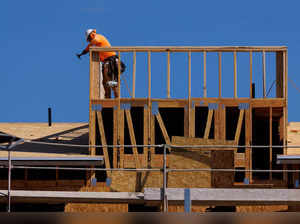

Three-dimensional (3D) printing, also known as additive manufacturing, has been making significant progress globally across various sectors such as manufacturing, aerospace, healthcare, , energy, electronics, fashion, and consumer goods. In real estate and construction, is being explored with projects ranging from small structures to entire buildings. Recently, L&T and IIT Madras developed India’s first 3D-printed in ’s Cambridge Layout, while Godrej Constructions built an office near in just 40 hours.
Given the swift progress in technology and the growing investments in the industry, it is only a matter of time before 3D printed houses become a tangible reality in India through . 3D printing, also known as additive manufacturing, revolutionizes traditional manufacturing processes. It involves creating objects layer by layer from digital models.
This method allows for the production of intricate and customized designs by depositing materials in a precise manner. In real estate and construction, 3D printing transforms the conventional approach by enabling the construction of buildings and components layer by layer. This technology offers unprecedented advantages, including the ability to create complex designs efficiently and with minimal material waste.
3D printing enhances construction timelines by automating the building process, resulting in increased speed. This acceleration is complemented by improved efficiency, as the technology minimizes material waste, promoting sustainable construction practices. Additionally, 3D printing provides a remarkable level of flexibility, enabling the construction of highly customized structures that can effectively address a wide range of architectural demands.
Despite the potential for higher initial investment costs, 3D printing in construction yields long-term savings through decreased labor and material expenses. The technology’s efficiency is underscored by rapid construction times, which significantly contribute to the overall efficiency of a project. The durability of 3D-printed structures is contingent upon the materials employed, and ongoing advancements in materials science aim to further enhance their robustness, ensuring a lasting and resilient built environment.
The 3D printing technology is scalable and has been effectively applied to large-scale projects like houses and bridges. The process involves layer-by-layer construction, enabling flexibility and adaptability to diverse project sizes. While the technology has proven successful in the construction of expansive structures, challenges arise when applying it to extremely tall buildings.
The construction of skyscrapers presents technical complexities such as structural stability, material strength, and printing precision over extended heights. Researchers in the field are actively addressing these challenges to expanding its applicability to even more ambitious and vertically challenging projects in the future. Current material options for 3D printing are more limited compared to traditional construction materials.
Challenges may arise for constructing very large or intricate structures, necessitating ongoing research and development. Skilled technicians are essential to operate and maintain 3D printers effectively, ensuring optimal performance. –Dubai’s “Office of the Future”: An office building constructed using advanced 3D printing methods.
–Nantes, France: A noteworthy 3D-printed house showcasing innovation in residential construction. –China: Various construction initiatives employing 3D printing methods, demonstrating its efficiency and sustainability in different projects. While 3D printing technology transforms traditional roles, it is more likely to lead to a shift in job requirements rather than widespread blue-collar job losses.
New opportunities emerge in roles focused on operating, maintaining, and advancing 3D printing technologies. Regulatory frameworks require adaptation to accommodate the unique aspects and standards of 3D printing in construction. Establishing clear safety guidelines is crucial to ensuring the structural integrity of 3D-printed buildings.
Regulatory frameworks for 3D printing in construction are still evolving, and there is no one-size-fits-all global benchmark. Different countries are developing standards based on their experiences, technological advancements, and the evolving nature of 3D printing in the construction sector. (Catch all the , Events and Updates on .
).
From: economictimes_indiatimes
URL: https://economictimes.indiatimes.com/news/et-explains/et-explainer-building-the-future-exploring-3d-printing-in-construction/articleshow/106534175.cms