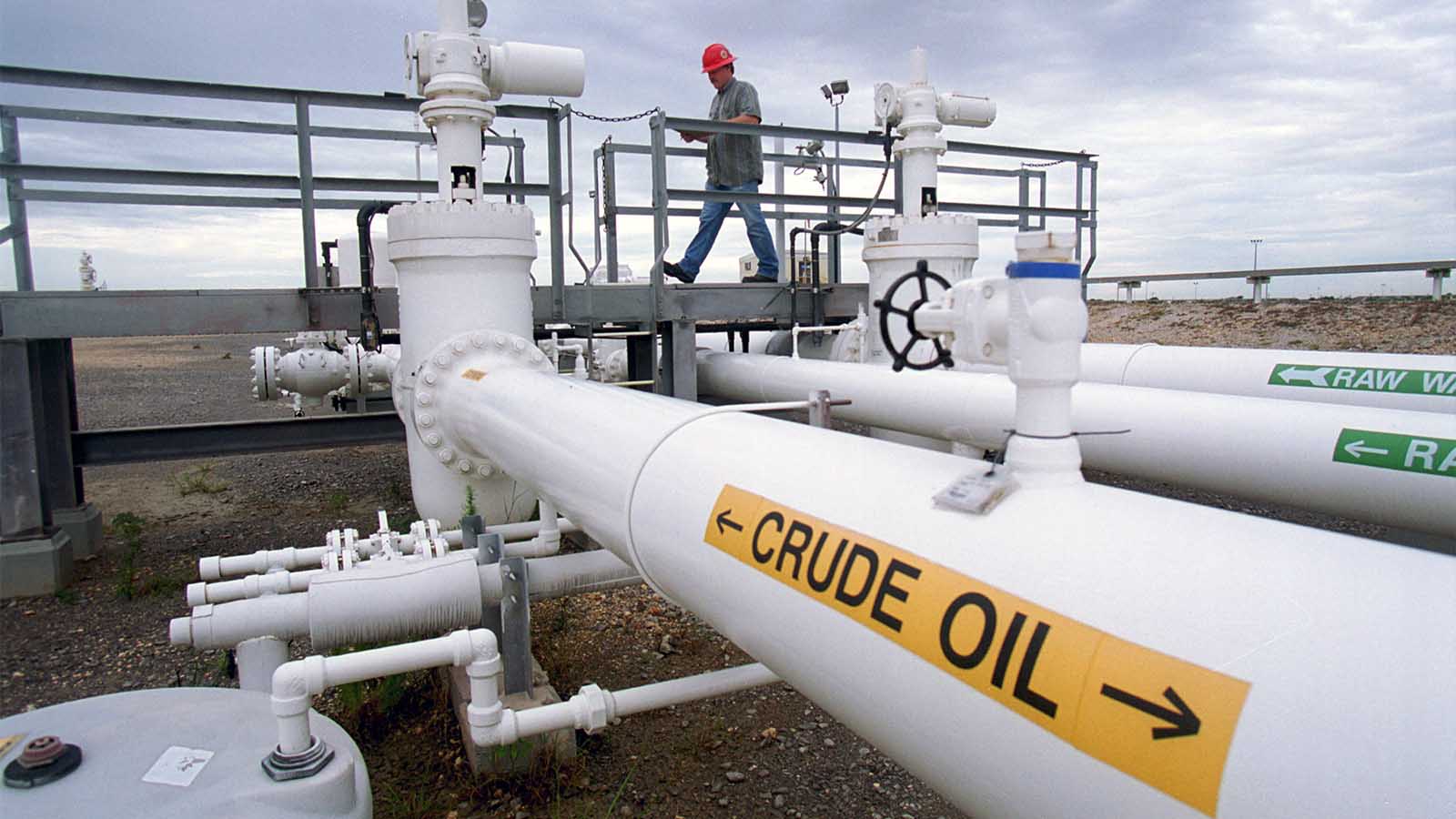

When Americans talk of “oil reserves,” they’re actually talking about the United States Strategic Petroleum Reserve (SPR). The Strategic Petroleum Reserve is the U. S.
government’s stash of that’s stored in along the Texas and Louisiana Gulf Coasts. The have an authorized capacity of , though the most oil the reserve has ever held was on Dec. 27, 2009.
On Oct. 14, 2022, the 405. 1 million barrels of crude oil.
The capacity of the SPR makes it a deterrent to oil import cutoffs and a key tool in foreign policy. Advertisement To offset further disruption in commercial oil supplies that would compromise the United States’ security position or economy, the government created the SPR after the . It was also necessary for the United States to meet its obligations, according to the International Energy Agency’s (IEA) emergency oil supply requirements.
The U. S. Department of Energy (DOE) plays a significant role in managing and overseeing the strategic reserve, which is the emergency stockpile of the United States.
The SPR is a critical component of the nation’s energy security strategy, and it is designed to provide a strategic supply of crude oil that can be tapped into during emergencies or disruptions in oil supplies. The DOE is responsible for the establishment, maintenance, and operation of the Strategic Petroleum Reserve via the Office of Petroleum Reserves. This includes the acquisition of crude oil, the construction and maintenance of storage facilities, and the development of procedures for the rapid release of oil during emergencies.
Advertisement It also manages several storage sites located in salt caverns and other underground facilities in various states, primarily along the Gulf Coast. These sites hold millions of barrels of crude oil. Sweet and Sour Crude Oil The sweet crude oil, which has a sulfur content of 0.
5 percent or below, and sour crude, which has a sulfur content ranging between 0. 5 percent but below 2 percent. Advertisement To attempt to combat high gasoline prices, the government has released .
However, as the oil reserve hits its lowest level, this can prove challenging in the future. There are also set rules on the release of oil from the SPR; the (EPCA) outlines the rules. There are three possible examples of when it allows drawdowns of oil: The maximum drawdown capability is 4.
4 million barrels a day, and it takes 13 days for SPR oil to hit the open market after a drawdown. But just announcing the release often has an immediate effect on oil prices. Advertisement To date, most drawdowns have been sales or exchanges.
For instance, after Hurricane Katrina when the damage to the Gulf of Mexico region caused widespread and critical disruption of oil production and circulation, then-President George W. Bush of 30 million barrels as part of an IEA collective action. Advertisement One of the most recent drawdowns was Oct.
19, 2022, when from the SPR would be put on the crude market to be delivered in December. This drawdown completes the historic, 180-million-barrel drawdown announced by the Biden administration on March 31, 2022. The March 31 announcement was the from the strategic reserves in U.
S. history. The drawdown placed 1 million barrels on the crude market daily — every day — for six months.
Advertisement “The world has never had a release of oil reserves at this 1 million per day rate for this length of time,” from the White House. “This record release will provide a historic amount of supply to serve as a bridge until the end of the year when domestic production ramps up. ” The U.
S. Department of Energy coordinated with international allies and partners to release additional oil from their strategic reserves, as well. Before that, on March 2, 2022, the another sale of 30 million barrels of crude oil.
That drawdown also was coordinated with member countries of the IEA to help address supply disruptions related to the war on Ukraine. While the March 31 drawdown was unprecedented, it is not considered an emergency. There have been just three emergency drawdowns since the establishment of the SPR: one after Hurricane Katrina in 2005 and one during Operation Desert Storm in 1991.
The most recent was in 2011 when then-President Barack Obama released 30 million barrels of oil onto the world market in response to production disruptions in Libya. Other countries in the IEA matched the amount, placing 60 million barrels of oil into circulation. Advertisement In the , Biden said the administration will replenish the SPR and intends to repurchase crude oil when prices drop to or below $67 to $72 per barrel.
To put that in perspective, crude oil was trading at around on Oct. 19, 2022. So the question remains, how long would the SPR last in the United States in the case of a full drawdown? Though the Strategic Petroleum Reserve has proven to be a reliable safeguard against short-term crises, it’s hard to imagine a situation so catastrophic that the United States would simply .
Advertisement If the president must order an emergency sale of SPR oil, it can be pumped at a maximum rate of for up to 90 days. Afterward, the drawdown rate declines to 3. 8 million barrels per day for another 30 days.
The rate drops again for up to 180 days until the stock is depleted. However, if the president chooses to release it at 1 million barrels per day, the stock (as of Oct. 14, 2022 was of oil) would last for just more than a year without it being replenished or with no other sources of oil.
And given the United States consumed an average of about of petroleum in 2021, 1 million barrels a day probably wouldn’t go very far. U. S.
President Joe Biden banned all imports of Russian oil, gas and energy on March 8, 2022, to further sanction Vladimir Putin for invading Ukraine. “That means Russian oil will no longer be acceptable at U. S.
ports and the American people will deal another powerful blow to Putin’s war machine,” Biden said in a short speech to the American people. Advertisement.
From: howstuffworks
URL: https://science.howstuffworks.com/environmental/energy/us-oil-reserves-last.htm