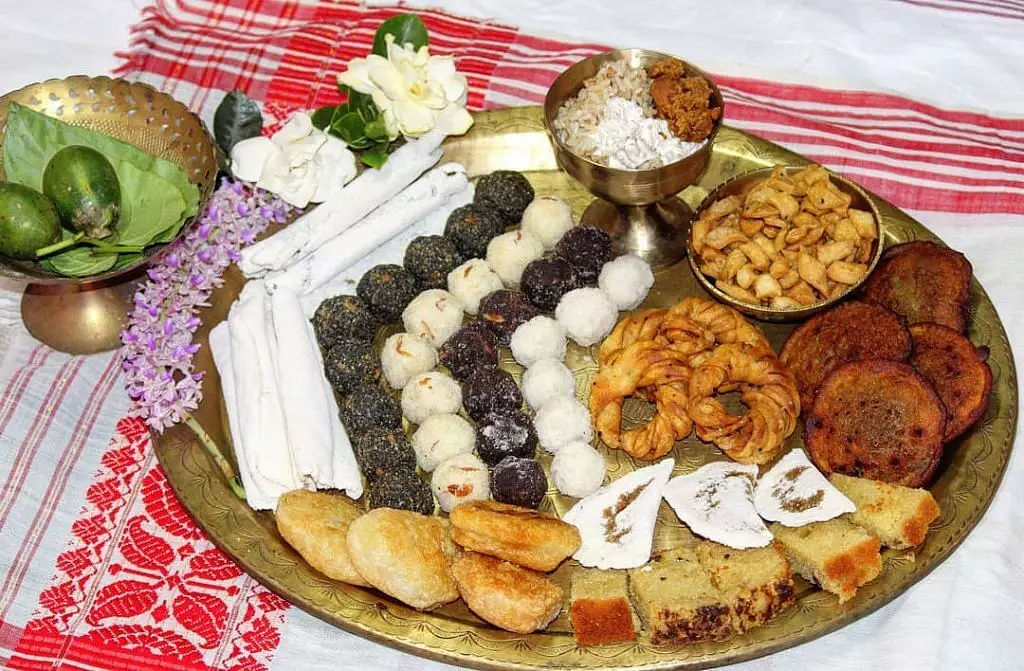

Magh Bihu, or Bhogali Bihu, being a post-harvest festival, the demand for traditional Assamese food items made from rice and other farm produce goes up during the festivity. As Guwahati is fast expanding both vertically and horizontally, the seasonal market for eatables like pitha, laroo, hurum, etc. has also grown.
Expanding makeshift markets for these traditional food items during Bhogali Bihu is reflective of the rising economic importance of this popular festival in the state. Some of these food items have also become popular as part of the breakfast menu and as snacks with tea, which has brought opportunities for food entrepreneurs to monetize the emerging food preference in Assamese households in the capital city and some other towns. The easy availability of packed rice powder with a longer shelf life has brought the opportunity to replace bread and butter with khulasapori pitha.
Street food outlets selling Tekelipitha have become popular with many city residents as pack-and-carry items for breakfast or as snacks with a cup of black tea after a brisk morning walk, jogging, or other physical exercise. Some of these traditional food items, like Jolpan of Doi, Chira, and Kumol Saul, jaggery, form part of the starters alongside North Indian and South Indian delicacies in many Assamese wedding feasts, which has brought new opportunities for food entrepreneurs to expand the business of traditional eatables. This has also boosted the demand for increased production of milk and derivatives in milk pockets, and farmers are getting premium prices for raw ingredients produced and supplied by them.
Growing market demand has facilitated the return of some of the traditional rice and millet varieties to the farm fields, but farmers continued production will depend on the sustainability of the market. The demand for traditional food items has also grown among the Assamese diaspora in other Indian cities and abroad, triggering demand for high-quality traditional food items such as pitha and laroo. The spread of digital technology and the rapidly growing digital payment ecosystem have allowed food entrepreneurs to explore these markets outside the state through online marketing channels and take advantage of e-commerce platforms.
Quality packaging and maintenance of food safety standards with a longer shelf life are crucial for such business ventures to succeed. The Assam government, recognising the business potential of traditional packed food items, can take the initiative of roping in major players in the packaging industry, food industry, and banking authorities to conduct special training for food entrepreneurs in the state to help them tap it optimally. Branding plays a crucial role, but it requires strict adherence to food quality and standards to stand out in competitive markets.
Consumers have a wide range of choices, and because of growing health consciousness, they will not go for any item that fails to meet quality and safety standards, despite strong cultural appeals. Labelling of traditional food items with accurate contents analysed in an accredited food and public health laboratory is critical to boosting confidence among consumers, irrespective of their cultural backgrounds or affinities. While seasonal makeshift Unorganised markets reflect a space for business opportunities; the sustainability of a commercial venture can come only from regular retail food markets, which have expanded beyond groceries into shopping malls and online food markets serviced by food aggregators.
Entrepreneurs trained and skilled in modern food market economics can leverage technologies better to tap market opportunities. Grooming gastronomists among ethnic communities will go a long way towards popularising traditional food and food practices in the northeastern region for tourists and visitors. Cultural diversity makes the region a unique destination for food and heritage lovers.
When tourists are able to connect better with rich food heritage and cultural practices associated with ethnic food items, they spread the word back in their own communities and places they travel. Such dynamics help traditional food items travel beyond cultural and geographic boundaries, and the northeast is no exception. Western, Chinese, North Indian, and South Indian cuisines made into kitchen and dining spaces in the state and region can be attributed to the influence of modern food markets, which are characterised by a high degree of professionalism, aggressive marketing effectively using both traditional and new media, quality packaging, labelling, and maintenance of global safety and standards.
With the exception of a few, food entrepreneurs in the state are still confined to unorganised markets and need skill training to look at the prospects of larger and more organised markets for traditional items. Bhogali Bihu festivities are reminders for such food entrepreneurs as well as policy planners to reflect on the larger market potential of traditional pitha, laroo, and other eatables made in Assamese households. Boosting the economy of traditional food items will also go a long way in preserving cultural practices associated with unique food habits that have evolved as part of post-harvest festivities in the state.
.
From: sentinel
URL: https://www.sentinelassam.com/editorial/monetizing-bihu-cuisines-686262