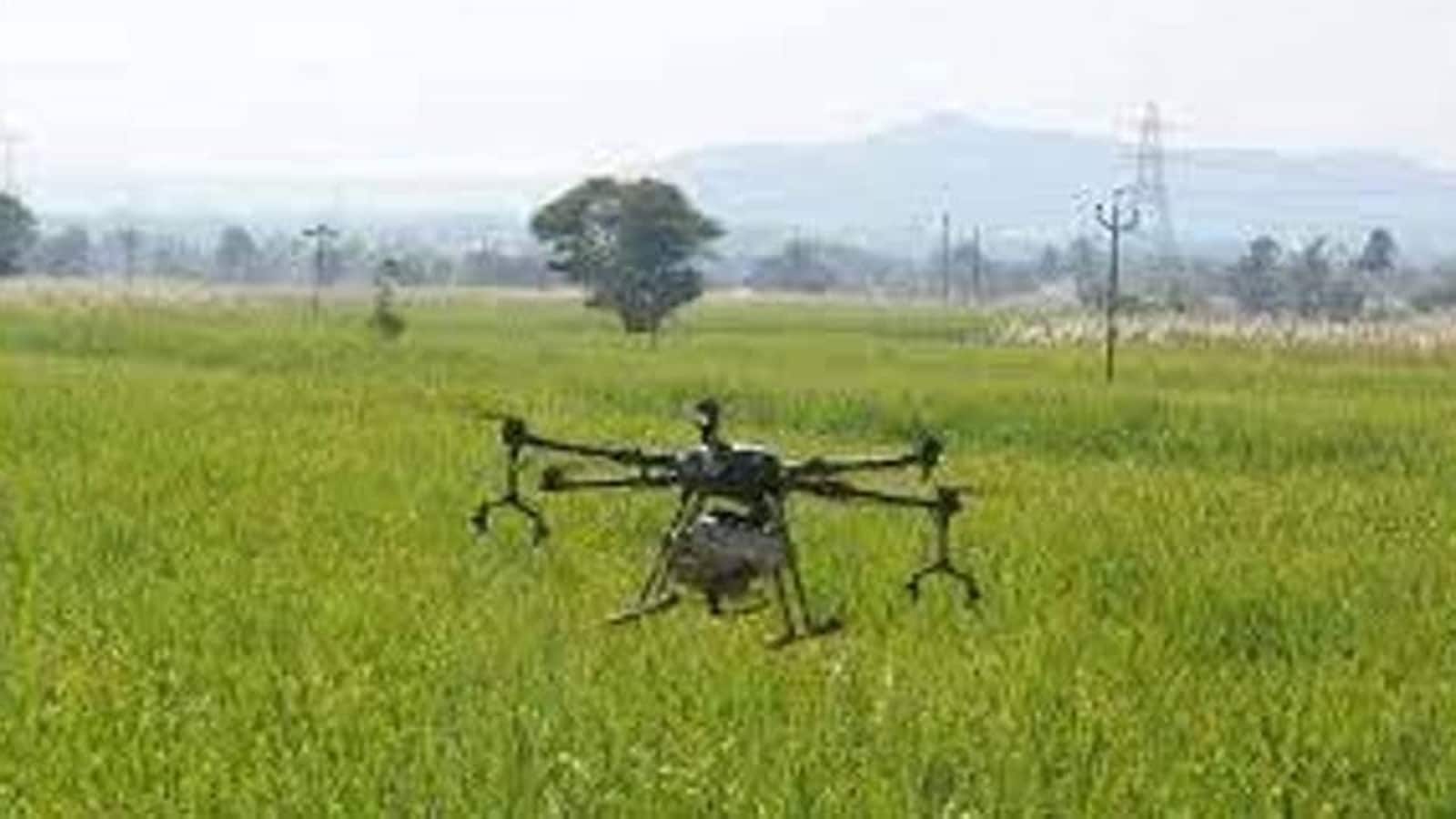

Travelling through the verdant serenity of the lush green fields of Punjab, my attention was drawn towards a distant buzzing sound. Curious to know the source, I got down from my vehicle, to be greeted by two rustic farmers operating a drone for spraying liquid nano urea. I was pleasantly surprised to see such an enthusiastic acceptance of a new concept by the farmers in a rural corner of the country.
This, I felt, was the “drone moment” for the agricultural sector of India, heralding a “drone movement” in our country. The farmers told me that they got information about the agri-drones during their visit to “Viksit Bharat Sankalp Yatra” in their village. The new technology was extremely useful for spraying liquid fertilisers and pesticides most efficiently, they said.
PREMIUM The agri-drone technology is proving to be a real breakthrough in modernising and transforming our farming practices. (ht file) Indian agriculture has already travelled a way by transitioning from being traditionally a bullock-cart-based occupation towards tractor-based agriculture. I am now seeing the genesis of the third wave of the agricultural revolution emerging in the form of the usage of drones in agricultural operations.
The agri-drone technology is proving to be a real breakthrough in modernising and transforming our farming practices. Gone are the days of tedious and time-consuming manual spraying of pesticides and liquid fertilisers through hand pumps; it is gradually being replaced by a much more efficient and productive technique of spraying using drones. Modernisation of agricultural practices is essential and indispensable for improving the efficiency and productivity of the farming sector so as to ensure food security, which is an important element of Viksit and Atmanirbhar Bharat.
The Green Revolution of the 1960s witnessed the introduction of new farm tools, high-yielding varieties of seeds, pesticides and chemical fertilisers. Over the years, an urgent need was felt to ensure a more balanced use of fertilisers, to maintain the long-term sustainability of our environment, soil health and soil fertility. In response, the government has embarked upon several initiatives like PM PRANAM and GOBARdhan to promote alternative fertilisers such as bio, nano and organic fertilisers.
Pradhan Mantri Kisan Samriddhi Kendra (PMKSK) is set up to enhance awareness about these new initiatives and provide integrated solutions to the farmers under one roof. The indigenously developed nano fertilisers are path-breaking as they provide an eco-friendly and effective alternative to conventional chemical fertilisers. Now, a 45-kg bag of conventional urea can be replaced by half litre bottle of nano urea with multifold advantages like better nutrient use, efficiency and easier handling, apart from helping maintain soil quality and improve crop yield.
The next challenge in ensuring its wider acceptability was to develop a method of efficient application system, creation of an ecosystem for easier adoption and effectively communicating the benefits to the farming community. The development of kisan drones by India’s young and dynamic startups offers an effective and efficient technique for the application of liquid fertilisers. Having the capacity to cover an acre of farmland within minutes proved to be a blessing to the farmers toiling hard for hours together in their fields.
With more free time at their disposal, farmers can engage in more productive work to increase their earnings and improve their quality of life. Prime Minister Narendra Modi is focussed on empowering women and increasing the share of women-led development within the country. He launched the Namo Drone Didi on November 30, during an interaction with beneficiaries in the Viksit Bharat Sankalp Yatra which aims to provide drones to 15,000 select women self-help groups for providing rental services to farmers for agriculture purposes by providing easy financial solutions.
This innovative initiative will not only make drones easily available to farmers for spraying liquid fertilisers and pesticides but also contribute to women’s empowerment and rural prosperity. It will give a boost to India’s drone aeronautics and help drone manufacturing start-ups set up manufacturing facilities. It will augment job opportunities for women and youth using creating employment ventures for drone pilots and drone mechanics in remote corners of the country and will give a fillip to the rural and urban economies at the same time.
Effective communication is the backbone of the successful implementation of any novel initiative. Drones have become a star attraction as part of the countrywide Viksit Bharat Sankalp Yatra that started on November 15, 2023. There have been more than 50,000 drone demonstrations across all the states during the yatra.
These demonstrations have ignited a high level of interest among the farmers for the adoption of this new technology in farming operations. The “drone moment” has given wings to India’s farming sector. Yes, I believe, we are poised to become the fastest-growing economy in the world.
Mansukh Mandaviya is Union minister of chemicals and fertilisers. The views expressed are personal Unlock a world of Benefits with HT! From insightful newsletters to real-time news alerts and a personalized news feed – it’s all here, just a click away! – Login Now! Continue reading with HT Premium Subscription Daily E Paper I Premium Articles I Brunch E Magazine I Daily Infographics Subscribe Now @1199/year Already Subscribed? Sign In SHARE THIS ARTICLE ON Share this article Share Via Copy Link Drone India.
From: hindustantimes
URL: https://www.hindustantimes.com/opinion/the-drone-moment-of-indian-agriculture-101703341147953.html